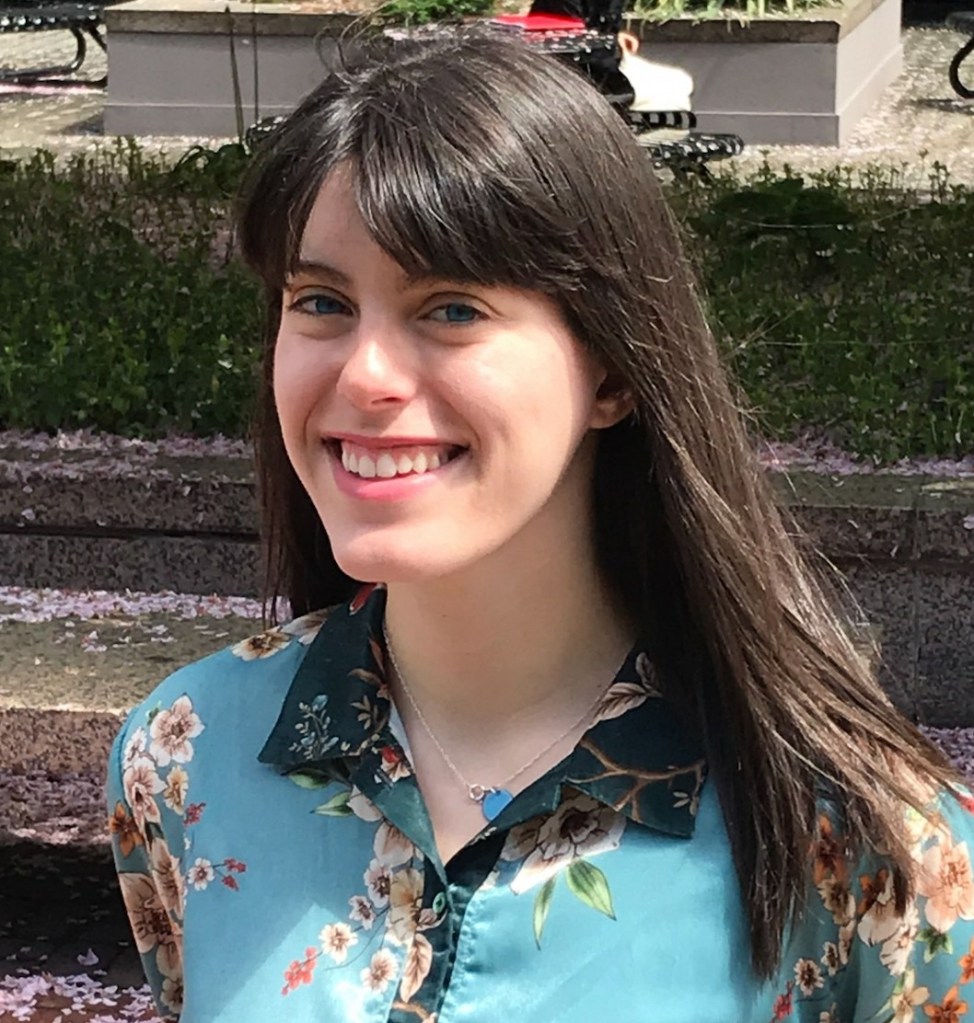
I have been a reference librarian at John Jay College of Criminal Justice since 2007. I enjoy consuming and writing about pop culture, old and new. Especially television. And podcasts.
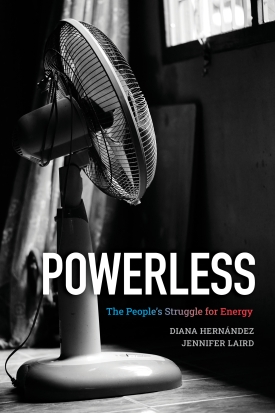
This episode is about energy insecurity, a topic you probably don’t hear as much about as you do food insecurity since it is by nature a hidden hardship. Richard Relkin, Assistant Vice President for Communications and Marketing at Lehman College, talks with Jennifer Laird, co-author of the book Powerless: The People’s Struggle for Energy, published this year by the Russel Sage Foundation. Dr. Laird’s co-author is Diana Hernández, Associate Professor of Sociomedical Sciences at Columbia University’s Mailman School of Public Health. Drs. Laird and Hernandez argue that household energy is a basic human right and propose policies to expand access to safe, clean, and affordable energy, including improving the energy safety net, reforming rate structures, and promoting equitable renewable energy transitions.
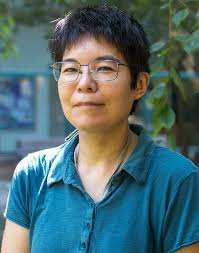
Dr. Jennifer Laird
Here are some of the resources discussed in this episode:
I am a proud citizen of the CUNYverse and I feel especially fortunate to be here right now. CUNY is in the middle of a three-year, Mellon Foundation-funded project called Cultivating Archives & Institutional Memory. It’s an unprecedented survey of the university’s history that involves collecting, documenting and providing access to CUNY’s rich archives that is already resulting in a valuable resource for historians and the general public.
In this episode, you’ll hear a conversation between three avid champions of Wikipedia and all its offshoots. Ann Matsuuchi, an instructional technology librarian at the LaGuardia Community College Library who has been a guest host on this podcast before, facilities a great discussion with Natalie Milbrodt, University Archivist and co-principal investigator (with Michael Waldman, Interim University Dean of Libraries and Information Resources ) of the Cultivating Archives project, and Wikimedian-in-Residence Richard Knipel. They provide some context that many of us might overlook or take for granted, that is, an overview and appreciation of Wikipedia and its role and evolution over the nearly 25 years of its existence. They focus on CUNY’s active role in facilitating community engagement in documenting history and culture for CUNY citizens, New Yorkers and the world.
If you teach at CUNY, you have the opportunity to work with these professionals in your classes. As you listen, you might develop some ideas, and you are invited to engage with Natalie, Richard and Ann in your classes.
Lastly, thanks to the Cultivating Archives & Institutional Memory project, all past and future episodes of this very podcast are now archived on JSTOR Forum, along with so many of the other items that the team is collecting and preserving. A special thanks to team member Digital Archivist Bridget Day for all her work on this and to all the many contributors to this podcast over the last eight years.
Thank you for listening, and enjoy the conversation. Here are some of the topics discussed in this episode:
This is a great conversation between my brilliant John Jay colleagues Dr. Nathan Lents, Professor of Biology, and Dr. Olivera Jokić, Associate Professor of English and Gender Studies and Director of the Gender Studies Program. The occasion is the publication of Nathan’s most recent book, The Sexual Evolution: How 500 million years of sex, gender and mating shape modern relationships. The book is about sexual behavior throughout the animal kingdom, what animals have to tell us about sex and gender, and in every sense of the word, the queerness of animals.
The conversation ventures into matters such as the limitations and even dangers of the preference for the human binary and those pesky Victorian buckets of maleness and femaleness; what does it mean to call something natural or unnatural; challenging the notion of the “survival of the fittest”; the benefits of neurodiversity; social control and its relation to categories; and spies and the role of taboos around sex. This conversation itself, a cross between a humanist and a scientist, exemplifies the benefits of variation. As Nathan says, “Diversity is often the point.”
You can hear more about Dr. Jokić’s recent work on Episode 106 in conversation with Dr. Dijana Jelača.
A chock-full bibliography featuring related and discussed works, provided by Dr. Jokić:
This is a very special episode! It was recorded with my John Jay colleagues before a live audience. It came about as an acknowledgement of this podcast passing the 100 episode mark and thanks to Dan Stageman, Director of Research at the Office for the Advancement of Research (OAR), Remmy Bahati, Research Communications Specialist at OAR, and the A/V team who recorded the event which you can listen to or watch on OAR’s YouTube channel.
We addressed the importance of the humanities in the face of a lot of pessimistic press about their relevance and value in recent years. The panel consisted ofDavid Munns (History), Allison Pease (Provost & Senior Vice President of Academic Affairs), Belinda Rincon (Latin American and Latinx Studies and English), and Dean Ringel (History). The audience participated and enriched the conversation even more.
In a bonus segment, I had a separate conversation withDr. Charissa Che, Assistant professor in the English department at John Jay. She talks about participating in the National Humanities Alliance (NHA) Advocacy Day and shares her clear-eyed and eloquent take on the state of the humanities.
Remember, as my college president said in 1983, “Poets make good doctors.”
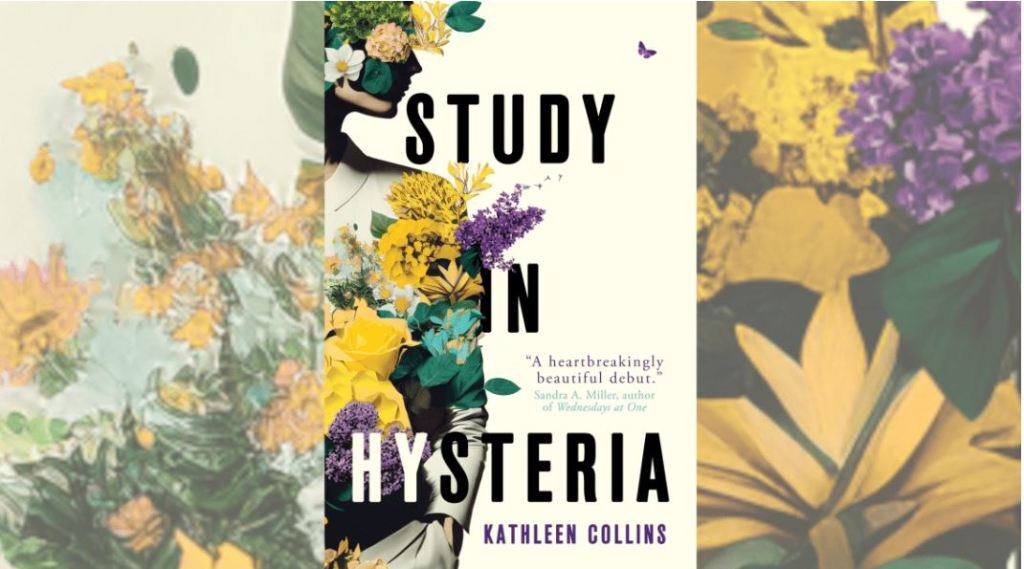
Dr. April Burns, Associate Professor of Psychology at Guttman Community College, joined me for a CUNY Academy Book Talk where the subject was my own novel, Study in Hysteria (Vine Leaves Press, 2024). The best part of publishing this book is getting to hear different reactions to the story and the characters, and I’m always gratified when I feel like readers experienced some connection to it. April was an incredibly thoughtful reader and came up with even more new insights and observations. This conversation was recorded live and is a slightly edited version of the event. I’m grateful to the CUNY Academy team for providing this opportunity and to Dr. April Burns for her unique take on the book which was, to my delight, very character-centric, and which included the fantastic adjectives endometrial and autoethnographical.
This episode takes us into the worlds of both academia and museums and reveals how the two come together in a unique program at CUNY. The conversation is between Valerie Paley, senior vice president and the Sue Ann Weinberg Director of the Patricia D. Klingenstein Library at The New York Historical, and Elaina Battista-Parsons, a current student in the Master of Arts in Museum Studies program. Valerie developed the program within the CUNY School of Professional Studies, and it launched in 2019. The two discuss the origins and mission of the program, the importance of cultural spaces, narratives, interpretation and education, innovative modalities, the “funding dance,” expanding and diversifying museum audiences, and breaking down barriers to make museum contents as accessible as possible. They also talk about showcasing women’s history, the HBO drama “The Gilded Age” and as, Elaina refers to what she is learning in the program, “secret museum truths.”
Valerie Paley is senior vice president and the Sue Ann Weinberg Director of the Patricia D. Klingenstein Library at The New York Historical. Formerly the chief historian at the institution, she is founding director of its Center for Women’s History, the first of its kind in the United States within the walls of a major museum. A graduate of Vassar College, Paley holds an MA in American Studies and a PhD in History from Columbia University, where she serves on the adjunct faculty at the Columbia Center for American Studies. Her work at New York Historical encompasses a critical range of curatorial, scholarly, and administrative responsibilities, including the development of a new joint MA Program in Museum Studies with the CUNY School of Professional Studies, which launched in Fall 2019. Paley is the 2020 recipient of the American Historical Association’s Herbert Feis Award, recognizing distinguished contributions to the field of public history.
Elaina Battista-Parsons wears many hats! You can learn more about her here and follow her on Instagram. Stay around for a mini-conversation between the two of us at the end to hear us enthuse about small presses and women and writers supporting one another.
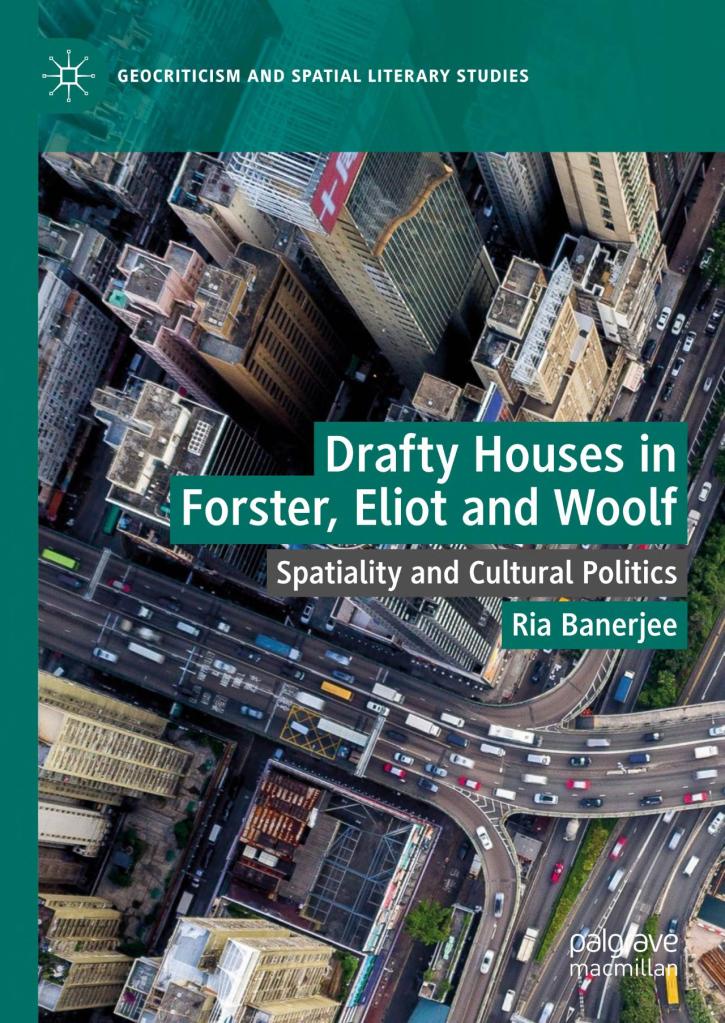
Dr. Jean Mills, Associate Professor and chairperson in the English Department at John Jay College of Criminal Justice, and Dr. Ria Banerjee, Professor of English and Honors Program Coordinator at Guttman Community College and the Graduate Center, are both literary modernists. In this episode they discuss feminist modernist studies, antiwar and pacifist literature, as well as ideas about teaching, learning, and scholarship in general. But the content is even more far reaching than that. There is talk of the value of physical bookstores, concepts of inheritance and relevance, archival research, anti-intellectualism, live reading marathons, and Star Trek slash fan fiction. They begin by discussing Ria’s book, Drafty Houses in Forster, Eliot, and Woolf: Spatiality and Cultural Politics.
This episode continues a collaboration with CUNY Academy, for which Dr. Banerjee is deputy director and awards director. She will be presenting at CUNY Academy Book Talks on Friday, April 4 at 3pm at the Graduate Center.
Dr. Dijana Jelača, lecturer in cinema studies at Brooklyn College, and Dr. Olivera Jokić, Associate Professor of English and Gender Studies and Director of the Gender Studies Program at John Jay College, discuss Past: An Introduction to the Problem: Želimir Žilnik on Film, Communism, and Former Yugoslavia. The book, originally published in 2013, is considered to be one with either no author or with many, and so Dr. Jokic is among them, having recently re-edited and translated it from Serbo-Croatian to English. Among the numerous issues raised by the book that Dijana and Olivera discuss is the political and philosophical context of making art, historiography and inclusion and exclusion, and the role of feminism in state socialism.
The popularity of the true crime genre, including books, podcasts, TV shows, and documentaries, has seen a resurgence over the past decade. It’s certainly had an effect on our media consumption, but it has other consequences, too. In The New True Crime: How the Rise of Serialized Storytelling Is Transforming Innocence (NYU Press*, 2023) , Dr. Diana Rickard, Professor of Criminal Justice and Social Science at Borough of Manhattan Community College, argues that it’s done much more, such as expose the inequalities inherent in the American criminal justice system. In this episode Diana talks with her BMCC colleague, Associate Professor of English Dr. Tracy Bealer, who is well-versed in the world of true crime fiction. You can check out her Substack newsletter, True Crime Fiction, and look out for a forthcoming collection from McFarland that looks at true crime through the lenses of history, ethics, gender, and genre to which she contributed a chapter entitled “A Counterhistory of American True Crime.”
Dr. Rickard mentions a couple of things in the episode that she recalled by name after the fact: an HBO MAX series Mind Over Murder, about the aftermath of an exoneration of several wrongfully convicted people in a small Nebraska town, and the book Dead Girls: Essays on Surviving an American Obsession by Alice Bolin.
This episode continues a collaboration with CUNY Academy. Diana Rickard is a past participant in their book talk series.
*Diana did an interview with NYU Press about The New True Crime.
You must be logged in to post a comment.