Episode 99: Maintaining the legacy of Black history

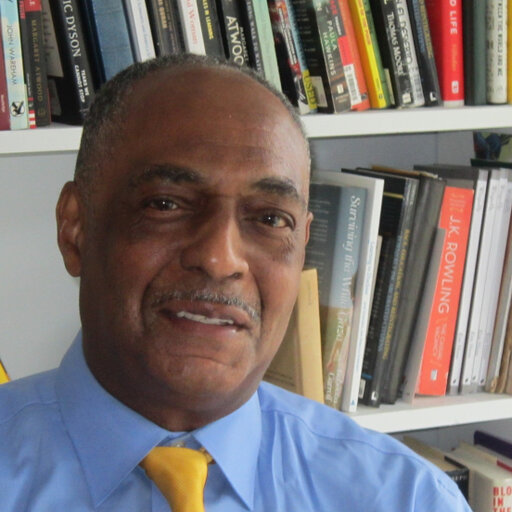
This episode features two pioneers in the field of Black Studies, both Lehman College faculty. Dr. Mark Christian, Professor in the Department of Africana Studies at Lehman College, is the author, most recently of two books, Booker T. Washington: A Life in American History * and Transatlantic Liverpool: Shades of the Black Atlantic, that are the basis of his conversation with one of his mentors, Dr. William Seraile, professor emeritus of African American history at Lehman. (See bios below.) Dr. Seraile asks his colleague Dr. Christian, how, as a kid who grew up in 1970s Liverpool, England, he got interested in African American Studies. They discuss a range of influential figures in Black history from Booker T. Washington, W.E.B. Dubois, Malcolm X, Marcus Garvey, and Muhammed Ali all the way to Barack Obama and Kamala Harris. Dr. Christian talks about the surprisingly critical role played by Thomas Dixon who was wary of Booker T. Washington’s self determination program and whose 1905 novel The Clansman was the basis for the highly controversial and legendarily racist film The Birth of a Nation produced in 1915. As Dr. Christian puts it, “If you want to understand what Booker T. Washington was up to, read Thomas Dixon.” Their conversation is both deep and wide. They raise questions about economic strength in Black communities, what has come from the lessons of Black leaders in U.S. history, and the origins and future of Black Studies.

As Dr. Seraile habitually tells his students: “Go to the library. Do the research.” The two commiserate about how difficult it once was to find information for research in Black Studies. Students and scholars don’t face the same obstacles these days. Case in point, the multi-volume Booker T. Washington Papers, mentioned in this episode, is widely available in public libraries (see call number E185.97 .W274 at your CUNY library).

Dr. Mark Christian has been at Lehman College since August 2011.  He arrived as a full and tenured professor and was the chairperson of the Department of Africana Studies from 2011 to 2019.  Since his tenure as chairperson ended, he has published three books in his areas of scholarly interest: The 20th Century Civil Rights Movement: An Africana Studies Perspective (2021); an award-winning biography, Booker T. Washington: A Life in American History (2021) and Transatlantic Liverpool: Shades of the Black Atlantic (2022).  Dr. Christian is a native of Liverpool, England; he completed his BA (Hons.) and PhD degrees in the UK, and his MA in Black Studies from The Ohio State University.  He has lived and worked in the US full-time since 2000.  A former senior Fulbright Scholar at Kent State University, Department of Pan African Studies (1997-8) and researcher with the Commonwealth Institute, University of London, Dr. Christian is currently completing a biography on Frederick Douglass for Bloomsbury Press that is slated to be published within the next year.

Dr. William Seraile is a professor emeritus of African American history from Lehman College where he was, in 1971, one of the pioneer scholars in the field of Africana Studies. His Peace Corps tour in Ethiopia (1963-1965) exposed him to the ancient kingdoms of Axum and Lalibela which inspired him to embark on a self- study of African American history. He earned a doctorate in American history from the CUNY in 1977. He is the author of five books and has been a frequent guest on radio and cable television shows. His scholarship and activism resulted in numerous awards including the prestigious Carter G. Woodson Scholars Medallion from the Association for the Study of African American Life and History (2017).

*Named a 2022 Outstanding Reference Source by the Reference and User Services Association, a division of the American Library Association.

Listen to Episode 99 now!
(Apple Podcasts)

Follow us! Indoor Voices (Apple Podcasts) (X)

Episode 98: George Guida on cops, characters, and craft

George Guida teaches writing and literature at New York City College of Technology. He is the author of ten books, including the novel Posts from Suburbia (Encircle Publications, 2022), and several poetry and essay collections. He also curates the Finger Lakes Arts Series in Dansville, New York. His new novel, The Uniform, was published by Guernica Editions in Spring 2024. It’s the mid-20th century story of Alfie Baliato, an aspiring musician whose family moves from a small town to New York City, following a fateful incident of racially motivated violence. Alfie’s romantic love for a cousin he meets in New York sends him on a decades-long odyssey across American and through struggles as a salesman, cop, family man, and artist in search of redemption.

In this episode, George talks with Jeffrey Heiman and Adam Berlin, editors of the nationally recognized, Pushcart Prize ranked J Journal: New Writing on Justice, a literary journal housed at John Jay College of Criminal Justice.  George has been published three times in that publication, the first piece, “Rome,” (Vol. 1, No. 1, Spring 2008) which previewed The Uniform, specifically Alfie’s experience as a cop at the 1968 Columbia University protests. They talk about Alfie, The Uniform and more, including some great craft questions. Jeffrey and Adam, English professors at John Jay and authors themselves, have visited Indoor Voices twice before (see episodes 38 and 50), and I look forward to more visits from them and more J Journal contributors in the future..

Check out reviews of The Uniform in Kirkus Reviews and The Brooklyn Rail.

Listen to Episode 98 now!
(Apple Podcasts)

Follow us! Indoor Voices (Apple Podcasts) (X)

Episode 97: Bryan Warde on persistent settler colonialism

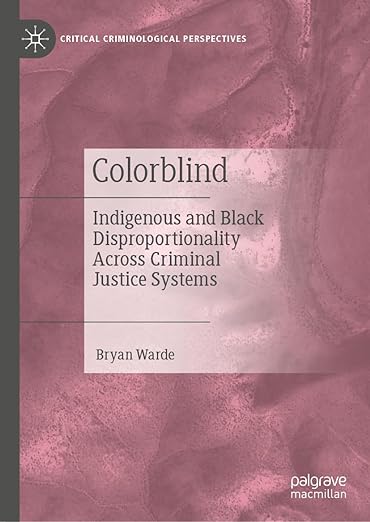
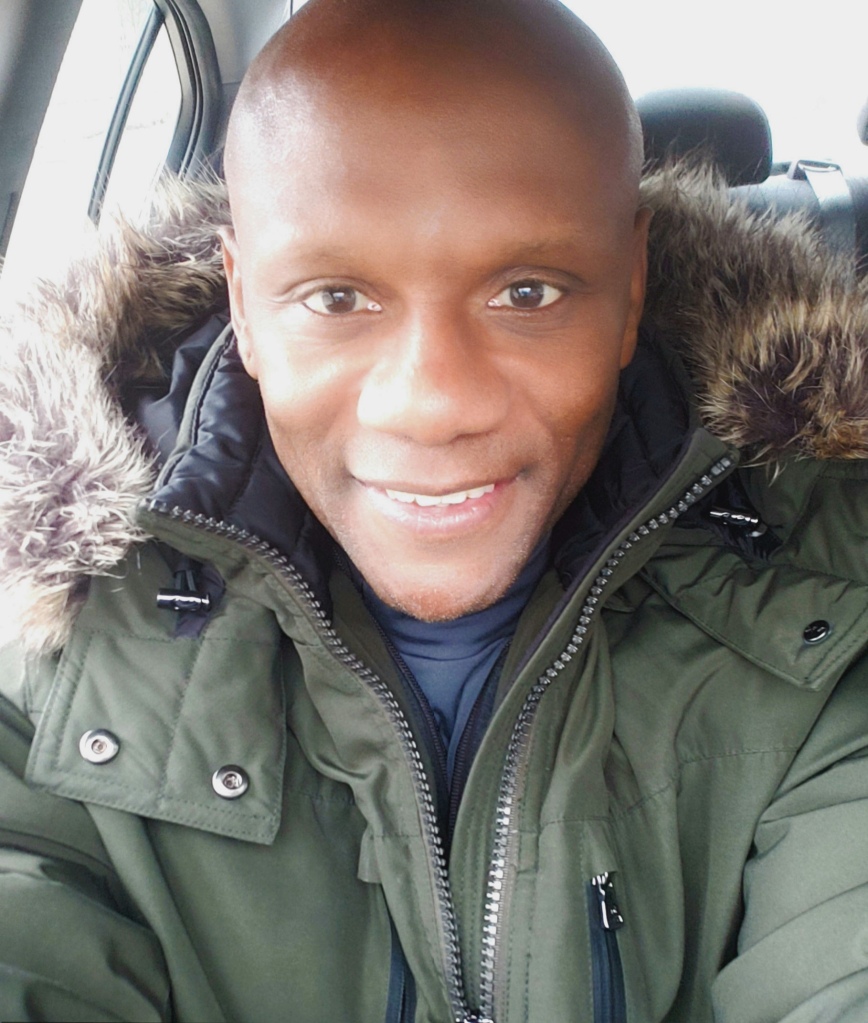
Bryan Warde is a licensed clinical social worker and a professor in the social work program at Lehman College and in the social welfare doctoral program at the Graduate Center. His most recent book is Colorblind: Indigenous and Black Disproportionality Across Criminal Justice Systems. In it, he addresses the phenomenon of settler colonialism and Indigenous and Black incarceration and criminal justice system disproportionality across the settler colonial states of the U.S., Canada, Australia, and the UK. In this episode, he talks with Richard Relkin, Assistant Vice President for Communications & Marketing at Lehman, about a number of related topics, including institutional vs. structural racism and higher education as a mainstay of white supremacy. To help readers and listeners get a clear picture of what’s going on – still, as it is by no means a concluded historical occurrence – Dr. Warde describes the trajectory from historical to modern day subjugation as both gatekeeping and a restriction of movement, which extends to academia. Despite these portrayals, he maintains hope for positive change and proposes solutions that are about replenishment and contributions to a community rather than about punishment, suggesting something along the lines of the processes of a tribal court.

Dr. Bryan Warde

Listen to Episode 97 now!
(Apple Podcasts)

Follow us! Indoor Voices (Apple Podcasts) (Twitter)

Episode 96: Dr. Calvin J. Smiley on putting reentry out of business

Dr. Calvin John Smiley, Associate Professor of Sociology at Hunter College, has an abolitionist vision for prisoner reentry into society and believes this can be done in pragmatic ways that amount to a “chipping away.” Abolition, in this context, refers to the dismantling of the prison industrial complex. “We should aspire as a system to be better than we are as individuals,” he says, and “move away from systems of vengeance.”

He and Dr. Sarah Hoiland, Associate Professor in the Behavioral & Social Sciences Department at Hostos Community College, discuss the content of Calvin’s book, Purgatory Citizenship: Reentry, Race, and Abolition (UC Press, 2023), how his death penalty work intersects with what he does now, and about how his forthcoming book, Defund: Conversations Toward Abolition (Haymarket Books, May 2024), came into being.

In addition to being the CUNY Academy Budget and Grants Director, Sarah is also deeply involved with prison education, teaching in a variety of New York State prisons with Hudson Link and John Jay’s Prison-to-College Pipeline and previously with the Bard Prison Initiative (2021-2023), and so she has experiences to share, too.

This episode marks the start of a collaboration with CUNY Academy for the Humanities and Sciences, aka the CUNY Academy, where, from time to time, we’ll feature some of the authors who participate in the Academy’s book talk series. Learn more about the mission and activities of the CUNY Academy here.

A special thanks to Dr. Ria Banerjee for getting this all going and arranging for this recording session to take place in the studio at Guttman Community College.

Related resources:

Related Indoor Voices episodes:

  • Sarah Hoiland on bikers, women and media (E22)
  • Second chances at Queensboro Correctional (E94)

Listen to Episode 96 now!
(Apple Podcasts)

Follow us! Indoor Voices (Apple Podcasts) (Twitter)

Episode 95: Crissa-Jean Chappell on creative writing & teaching

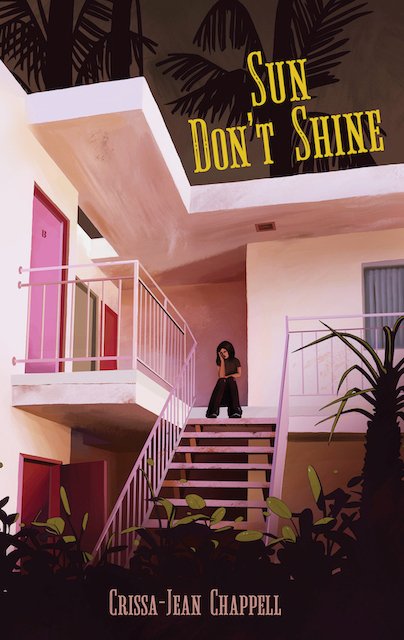
Crissa-Jean Chappell is an Adjunct Assistant Professor of English at Lehman College and the author of several young adult novels. Sun Don’t Shine, her most recent work, is a thriller that follows 16-year-old Reece who was abducted by her father ten years ago. It’s a tale of secrets, truth, and resilience. Rich Relkin, Assistant Vice President for Communications & Marketing at Lehman, asks Crissa-Jean about her creative writing and teaching processes and how they intersect. Fiction writers, writing instructors, and fans of YA lit that leans toward the dark will find much to relate to in this conversation.

Listen to Episode 95 now!
(Apple Podcasts)

Follow us! Indoor Voices (Apple Podcasts) (Twitter)

Episode 94: Second chances at Queensboro Correctional

LaGuardia Community College Professors Joan Schwartz-Chaney (Humanities) and John Chaney (Criminal Justice) were recently awarded a Second Chance Act Improving Reentry Education and Employment Outcomes grant from the US Department of Justice to fund a comprehensive prison-to-college project at Queensboro Correctional Facility. Their program, the Accelerated College Transition (ACT) project of LaGuardia Community College, will target the residents of Queensboro Correctional, a New York State reentry prison which is across the street from the LaGuardia campus. The project aims to create a multidisciplinary array of prerelease and post release academic and ACE classes, resources and services, targeting Queensboro residents who are expected to be released within four months, as well as those on work release. The ACT project will increase the likelihood of successful community reintegration, increase public safety, and enhance the college’s already successful prerelease volunteer services project at the prison. The $900,000 to be allocated over three years will fund the cost of credit-bearing classes and staffing. Learn more about the project and its principal investigators in this CUNY news release.

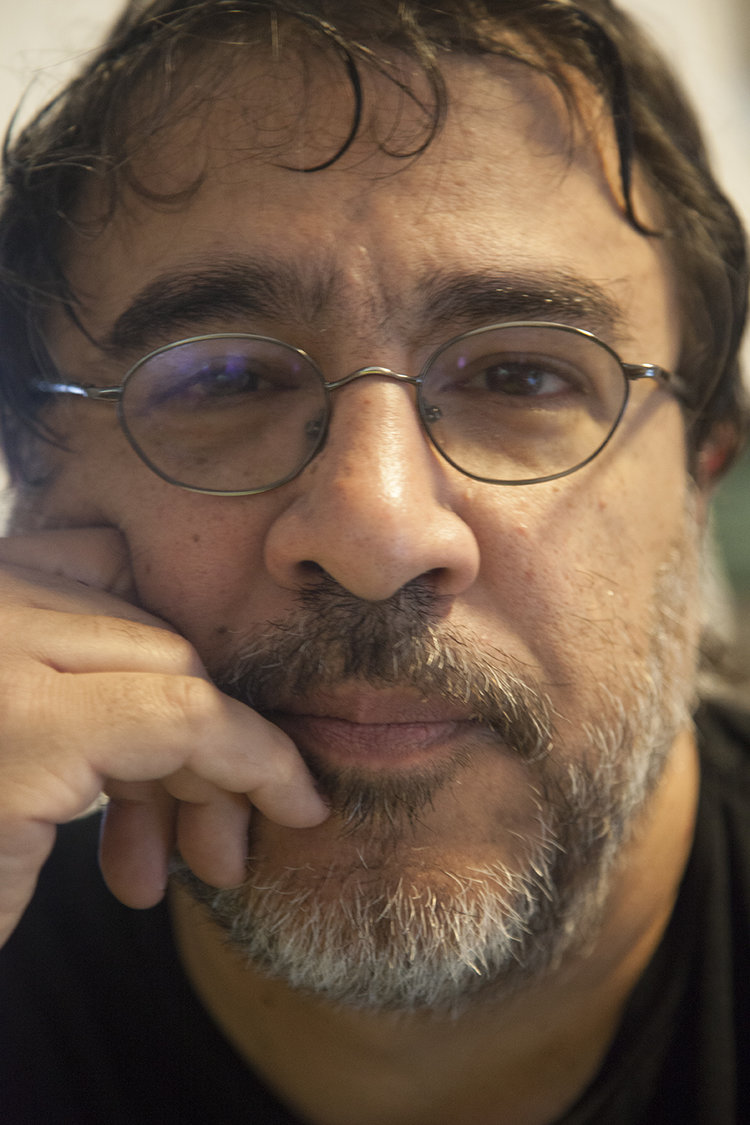
Talking in this episode with Professors Chaney and Chaney-Schwartz is Prof. Hugo Fernandez, a photographer, a Professor of Humanities at LaGuardia, and the host of “What Going On? With Hugo Fernandez” at WLGR, LaGuardia Web Radio.

Listen to Episode 94 now!
(Apple Podcasts)

Follow us! Indoor Voices (Apple Podcasts) (Twitter)

Episode 93: Resistance, rebellion, and resilience: American slavery on film

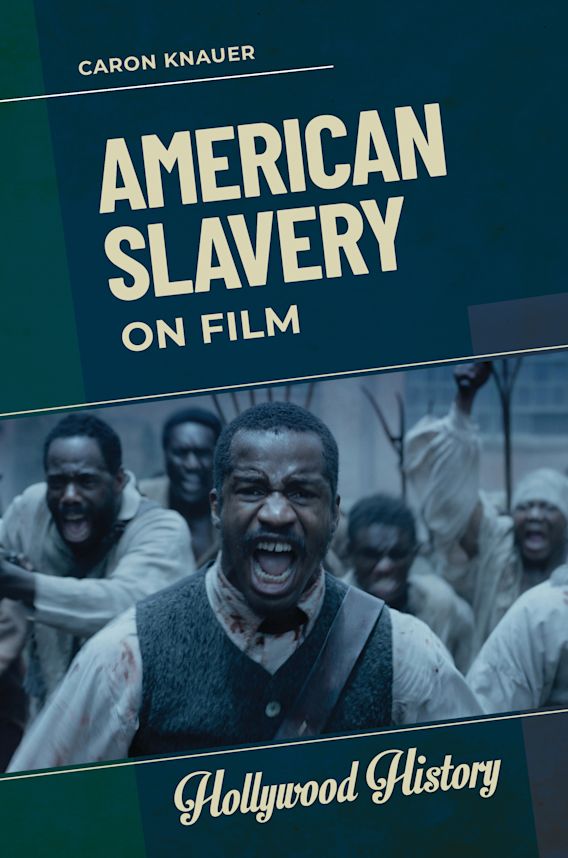
Caron Knauer’s recent publication, American Slavery on Film, is part of a Hollywood History series published by Bloomsbury/ABC-CLIO. Professor Knauer who teaches English at LaGuardia Community College, chose ten films, from Uncle Tom’s Cabin (1914) to Harriet (2019), to examine historical and contemporary depictions of the resistance, rebellion, and resilience of enslaved African Americans in the United States from the Antebellum period to Emancipation. In this episode Caron talks with Ann Matsuuchi, a librarian and faculty member at La Guardia, and Sherry Antoine, executive director of AfroCROWD. All three have a deep interest in the subject and in the role and importance of popular culture and in reference sources in education. They do a great job of getting us listeners to want to watch and learn more the films and filmmakers and writers they talk about.

Sherry Antoine, MPA, is the executive director of AfroCROWD (Afro Free Culture Crowdsourcing Wikimedia), an initiative which seeks to increase awareness and the number of people of African descent who actively partake in the Wikimedia and free knowledge, culture and software movements.

Ann Matsuuchi is currently working on writing about filmmaker Melvin Van Peebles and a book about writer and critic Samuel R. Delany with CUNY/SUNY colleagues Beth Mannion, Lavelle Porter, and Kenny Roggenkamp. She continues her valuable work with the Wikimedia New York City chapter on finding new ways of using Wikipedia in educational and media contexts, especially in the age of AI. 

Caron Knauer was associate producer of the 1995 film Waiting to Exhale. She helps produce screenings and events for Black History Month at LaGuardia Community College. On her web site, there is a comprehensive timeline whose emphasis on rebels, resistance, revolts, laws, films, and the resilience of African Americans provides a vital historical resource.

A couple of related links to topics from the episode:

Listen to Episode 93 now!
(Apple Podcasts)

Follow us! Indoor Voices (Apple Podcasts) (Twitter)

Episode 92: Louis Bury on the way things go

Louis Bury is an associate professor in the English department at Hostos Community College. He’s also an art critic, writer and poet. His first creative nonfiction book, Exercises in Criticism, was an experiment in applied poetics where he used what are known as constraint-based methods in order to write about constraint-based literature. In this episode we talk about his most recent book, The Way Things Go, (punctum books, 2023). It’s another work of creative nonfiction, also using constraint writing, and is comprised of multiple forms such as numbered lines of prose, poetry, data, dialogue, news headlines, and a couple of specific CUNY documents that will be familiar to many listeners. The book’s title, and to a large degree its subject matter, is inspired by the 1987 Fischli and Weiss film “The Way Things Go.” It is mostly quite personal, and includes intimate philosophical reflections, letters to and from Lou’s sister, Emily, and even an MRI report. At the root of all of it is a meditation on human vulnerability, of the physical, emotional and existential variety, and an overriding theme of climate change. That precarity is reflected in a grappling with daily human existence as well as the larger forces that threaten the survival of the planet. Despite the previous couple of sentences, this conversation is upbeat, and I hope you’ll find it just as inspiring as I did.

Listen to Episode 92 now!
(Apple Podcasts)

Follow us! Indoor Voices (Apple Podcasts) (Twitter)

Episode 91: Dara Byrne on making way for inspiration

Until the end of summer 2022, Dr. Dara Byrne was dean of undergraduate studies and associate provost for undergraduate retention at John Jay College. She’s now the dean of Macaulay Honors College. She’s worn a few hats during her twenty years at CUNY and the how and the why of that makes for an interesting and inspiring journey. In this episode, you get to hear the origin story of a dedicated educator and an effective administrator, one who would have been quite surprised if you told her in high school that those descriptors would one day apply to her. She talks about her very intentional leadership philosophy which she likens to an early morning snow plow. As she says, “The best part of power and access is to be able to use it to clear the debris out of the way.”

There are some great takeaways in here, not just for would-be educators and administrators, but for students and faculty and, well, humans. My personal favorite: “Learn about what you’re good at. Explore. Be open.”

Here’s more info about the AI project, “Using AI to help more college students graduate,” that Dara refers to in the interview.

Listen to Episode 91 now!
(Apple Podcasts)

Follow us! Indoor Voices (Apple Podcasts) (Twitter)

Episode 90: Academic librarians on popular culture

Academic librarians are unique beings in the academic world. We are faculty, we publish (or perish), and though we may or may not have PhDs, we do have (at least) two Masters degrees. We come from all disciplines, work histories, and neighborhoods (not just Brooklyn). We are outliers, in a sense, and, in general, we embrace that.

Popular culture research is also a unique entity in the academy. While popular culture studies is a vast umbrella and can be found in a variety of disciplinary homes – anthropology, American studies, media & communications, cultural studies, comp lit, etc. – it’s usually a niche hidden in or overlapped by or subsumed by a larger subject area. There exist rigorous and serious popular culture studies programs, all the way up through the doctoral level, at many universities around the country. But in most places, pop culture scholars are outliers. It shouldn’t be surprising, then, that a fair number of academic librarians are found in this eclectic space.

You will find librarians all over CUNY who are much more than their Masters in Library Science degrees. For some, our MLS is our primary identity and that is the area where we publish. For others, the library part is our job – which we tend to love, on the whole – but our professional passion lies in our “other” Masters discipline, or somewhere else altogether. The next time you run into an academic librarian, after you’ve asked your reference question and gotten an answer, ask them, “What’s your second Masters in?” or “What’s your research area?” You might be surprised and delighted. And so will the librarian.

In this conversation, I talked with two of my CUNY librarian colleagues – Vikki Terrile, Assistant Professor at the Graduate School of Library and Information Studies at Queens College and Stephanie Margolin, Associate Professor and librarian at Hunter College – about their popular culture journeys in the academy.

Related:

Listen to Episode 90 now!
(Apple Podcasts)

Follow us! Indoor Voices (Apple Podcasts) (Twitter)