

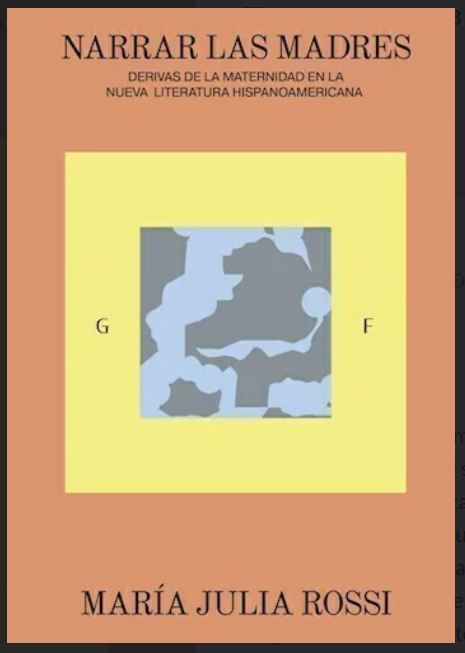
This episode exemplifies the ideals of Indoor Voices. It is a conversation between two people whose work overlaps and interfaces, both working away at CUNY for years without knowing of the other until very recently, and now that they have met, they have already collaborated and have so much to talk about that it justifies a podcast of its own. You’ll also witness them truly thinking and listening – in real time. It is the exact opposite of a scripted conversation. Dr. Destry Maria Sibley is a recent CUNY graduate center alumna whose dissertation is entitled, “Narrating Mother, Narrating Twenty-First Century America: On Choice, Refusal, and Relation.” Dr. María Julia Rossi is professor in the Modern Languages and Literatures dept at John Jay and the author of, among other books, Narrar Las Madres or Narrating Mothers. To put it too simply, the nexus of their scholarly Venn diagram is narratives about motherhood. They talk about the proliferation of motherhood literature in the last decade and a half; the presence in more recent memoirs of maternal ambivalence; the freedom of fictional characters to express less nuanced feelings and behaviors; the role of a political angle on motherhood narratives, asking whether the political and the personal are on a continuum or exist as a dichotomy; the differences between motherhood literature in Spanish and English; and how texts on motherhood both reflect cultural evolution and affect it.
Recommended reading:
- Eva Baltasar, Boulder
- Rachel Cusk, A Life’s Work: On Becoming a Mother
- Laura Freixas, A mí no me iba a pasar: Una autobiografía con perspectiva de género
- Ariana Harwicz, Matate, amor (translated as Die, My Love)
- Nuria Labari, La mejor madre del mundo (translated as World’s Best Mother)
- Jane Lazarre, The Mother Knot (translated as El nudo materno)
- Yiyun Li, Things in Nature Merely Grow
- Valeria Luiselli, Lost Children Archive
- Valeria Luiselli, Los ingrávidos (translated as Faces in the Crowd)
- Lorena Salazar Masso, Esta herida llena de peces (translated as This Wound Full of Fish)
- Brenda Navarro, Casas vacías (translated as Empty Houses)
- Helen Phillips,The Need
- Anne Boyd Rious, Meg, Jo, Beth, Amy: The Story of Little Women and Why It Still Matters
- Samanta Schweblin, Fever Dream
Bonus listening:
- Los Niños de Morelia (The Children of Morelia)
- Samanta Schweblin & Valeria Luiselli interview: Revelation of a Secret
This episode was recorded at John Jay College’s brand new Digital Creation Lab. Thank you, Program Manager Girard Tecson for making the studio space available to us.
Listen to Episode 116 now! (Apple Podcasts)
Follow us! Indoor Voices (Apple Podcasts) (X)


 Indoor Voices Podcast
You must be logged in to post a comment.