Episode 112: “Wikipedia is the CUNY of the Internet”

Welcome to Season 9!

I am a proud citizen of the CUNYverse and I feel especially fortunate to be here right now. CUNY is in the middle of a three-year, Mellon Foundation-funded project called Cultivating Archives & Institutional Memory. It’s an unprecedented survey of the university’s history that involves collecting, documenting and providing access to CUNY’s rich archives that is already resulting in a valuable resource for historians and the general public.

At the same time, and in collaboration with the archiving project, CUNY has its first Wikimedian-in-Residence thanks to funding from the Craig Newmark Philanthropies.

In this episode, you’ll hear a conversation between three avid champions of Wikipedia and all its offshoots. Ann Matsuuchi, an instructional technology librarian at the LaGuardia Community College Library who has been a guest host on this podcast before, facilities a great discussion with Natalie Milbrodt, University Archivist and co-principal investigator (with Michael Waldman, Interim University Dean of Libraries and Information Resources ) of the Cultivating Archives project, and Wikimedian-in-Residence Richard Knipel. They provide some context that many of us might overlook or take for granted, that is, an overview and appreciation of Wikipedia and its role and evolution over the nearly 25 years of its existence. They focus on CUNY’s active role in facilitating community engagement in documenting history and culture for CUNY citizens, New Yorkers and the world.

If you teach at CUNY, you have the opportunity to work with these professionals in your classes. As you listen, you might develop some ideas, and you are invited to engage with Natalie, Richard and Ann in your classes.

Lastly, thanks to the Cultivating Archives & Institutional Memory project, all past and future episodes of this very podcast are now archived on JSTOR Forum, along with so many of the other items that the team is collecting and preserving. A special thanks to team member Digital Archivist Bridget Day for all her work on this and to all the many contributors to this podcast over the last eight years.

Thank you for listening, and enjoy the conversation. Here are some of the topics discussed in this episode:

Listen to Episode 112 now! (Apple Podcasts)

Follow us! Indoor Voices (Apple Podcasts) (X)

Episode 100: How did this %@#! bridge get its name?

Rebecca Bratspies and Natalie Gomez-Velez have been colleagues for twenty years, both professors of law at CUNY School of Law. In this episode they talk about Professor Bratspies’ book, Naming Gotham: The Villains, Rogues and Heroes Behind New York’s Place Names (Arcadia Publishing 2023).

Professor Bratspies was motivated to embark on this project while stuck in a traffic jam in the Bronx. Her frustration at the famously busy Major Deegan Expressway led to the question, “Who were these people and why do they name things after them?” For many years her work has been in the area of environmental justice and human rights. While Naming Gotham may look at first glance like a departure, it’s not. It, too, addresses issues of power and social inequality and incorporates legal history such as the origins of Title VI of the Civil Rights Act of 1964.

Listeners will get a preview of some of the so-called villains – Richard Riker, Peter Stuyvesant – and heroes – Jackie Robinson, Billie Jean King, Herbert Lehman* – whose sometimes surprising stories are told in Naming Gotham. Profs. Bratspies and Gomez-Velez also talk about connections between teaching and some of the named parties as well as the uses of history and the way it repeats itself. And as they agree, there is always something more to learn about New York City.

Rebecca Bratspies and Natalie Gomez-Velez

You can learn more about Rebecca Bratspies at https://www.rebeccabratspies.com/ and follow her on Twitter, Bluesky, LinkedIn, and Facebook.

You can learn more about Natalie Gomez-Velez at https://www.nataliegomezvelez.com/ and follow her on LinkedIn.

This episode continues a collaboration with CUNY Academy. Rebecca Bratspies is a past participant in their book talk series.

*An article about naming CUNY places appeared in the PSC CUNY Clarion.

Listen to Episode 100 now!
(Apple Podcasts)

Follow us! Indoor Voices (Apple Podcasts) (X)

Episode 99: Maintaining the legacy of Black history

This episode features two pioneers in the field of Black Studies, both Lehman College faculty. Dr. Mark Christian, Professor in the Department of Africana Studies at Lehman College, is the author, most recently of two books, Booker T. Washington: A Life in American History * and Transatlantic Liverpool: Shades of the Black Atlantic, that are the basis of his conversation with one of his mentors, Dr. William Seraile, professor emeritus of African American history at Lehman. (See bios below.) Dr. Seraile asks his colleague Dr. Christian, how, as a kid who grew up in 1970s Liverpool, England, he got interested in African American Studies. They discuss a range of influential figures in Black history from Booker T. Washington, W.E.B. Dubois, Malcolm X, Marcus Garvey, and Muhammed Ali all the way to Barack Obama and Kamala Harris. Dr. Christian talks about the surprisingly critical role played by Thomas Dixon who was wary of Booker T. Washington’s self determination program and whose 1905 novel The Clansman was the basis for the highly controversial and legendarily racist film The Birth of a Nation produced in 1915. As Dr. Christian puts it, “If you want to understand what Booker T. Washington was up to, read Thomas Dixon.” Their conversation is both deep and wide. They raise questions about economic strength in Black communities, what has come from the lessons of Black leaders in U.S. history, and the origins and future of Black Studies.

As Dr. Seraile habitually tells his students: “Go to the library. Do the research.” The two commiserate about how difficult it once was to find information for research in Black Studies. Students and scholars don’t face the same obstacles these days. Case in point, the multi-volume Booker T. Washington Papers, mentioned in this episode, is widely available in public libraries (see call number E185.97 .W274 at your CUNY library).

Dr. Mark Christian has been at Lehman College since August 2011.  He arrived as a full and tenured professor and was the chairperson of the Department of Africana Studies from 2011 to 2019.  Since his tenure as chairperson ended, he has published three books in his areas of scholarly interest: The 20th Century Civil Rights Movement: An Africana Studies Perspective (2021); an award-winning biography, Booker T. Washington: A Life in American History (2021) and Transatlantic Liverpool: Shades of the Black Atlantic (2022).  Dr. Christian is a native of Liverpool, England; he completed his BA (Hons.) and PhD degrees in the UK, and his MA in Black Studies from The Ohio State University.  He has lived and worked in the US full-time since 2000.  A former senior Fulbright Scholar at Kent State University, Department of Pan African Studies (1997-8) and researcher with the Commonwealth Institute, University of London, Dr. Christian is currently completing a biography on Frederick Douglass for Bloomsbury Press that is slated to be published within the next year.

Dr. William Seraile is a professor emeritus of African American history from Lehman College where he was, in 1971, one of the pioneer scholars in the field of Africana Studies. His Peace Corps tour in Ethiopia (1963-1965) exposed him to the ancient kingdoms of Axum and Lalibela which inspired him to embark on a self- study of African American history. He earned a doctorate in American history from the CUNY in 1977. He is the author of five books and has been a frequent guest on radio and cable television shows. His scholarship and activism resulted in numerous awards including the prestigious Carter G. Woodson Scholars Medallion from the Association for the Study of African American Life and History (2017).

*Named a 2022 Outstanding Reference Source by the Reference and User Services Association, a division of the American Library Association.

Listen to Episode 99 now!
(Apple Podcasts)

Follow us! Indoor Voices (Apple Podcasts) (X)

Episode 93: Resistance, rebellion, and resilience: American slavery on film

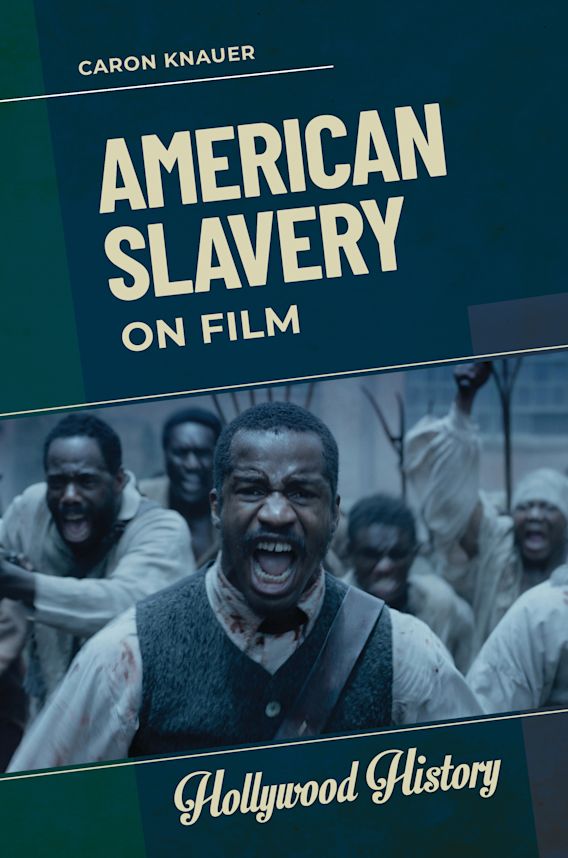
Caron Knauer’s recent publication, American Slavery on Film, is part of a Hollywood History series published by Bloomsbury/ABC-CLIO. Professor Knauer who teaches English at LaGuardia Community College, chose ten films, from Uncle Tom’s Cabin (1914) to Harriet (2019), to examine historical and contemporary depictions of the resistance, rebellion, and resilience of enslaved African Americans in the United States from the Antebellum period to Emancipation. In this episode Caron talks with Ann Matsuuchi, a librarian and faculty member at La Guardia, and Sherry Antoine, executive director of AfroCROWD. All three have a deep interest in the subject and in the role and importance of popular culture and in reference sources in education. They do a great job of getting us listeners to want to watch and learn more the films and filmmakers and writers they talk about.

Sherry Antoine, MPA, is the executive director of AfroCROWD (Afro Free Culture Crowdsourcing Wikimedia), an initiative which seeks to increase awareness and the number of people of African descent who actively partake in the Wikimedia and free knowledge, culture and software movements.

Ann Matsuuchi is currently working on writing about filmmaker Melvin Van Peebles and a book about writer and critic Samuel R. Delany with CUNY/SUNY colleagues Beth Mannion, Lavelle Porter, and Kenny Roggenkamp. She continues her valuable work with the Wikimedia New York City chapter on finding new ways of using Wikipedia in educational and media contexts, especially in the age of AI. 

Caron Knauer was associate producer of the 1995 film Waiting to Exhale. She helps produce screenings and events for Black History Month at LaGuardia Community College. On her web site, there is a comprehensive timeline whose emphasis on rebels, resistance, revolts, laws, films, and the resilience of African Americans provides a vital historical resource.

A couple of related links to topics from the episode:

Listen to Episode 93 now!
(Apple Podcasts)

Follow us! Indoor Voices (Apple Podcasts) (Twitter)