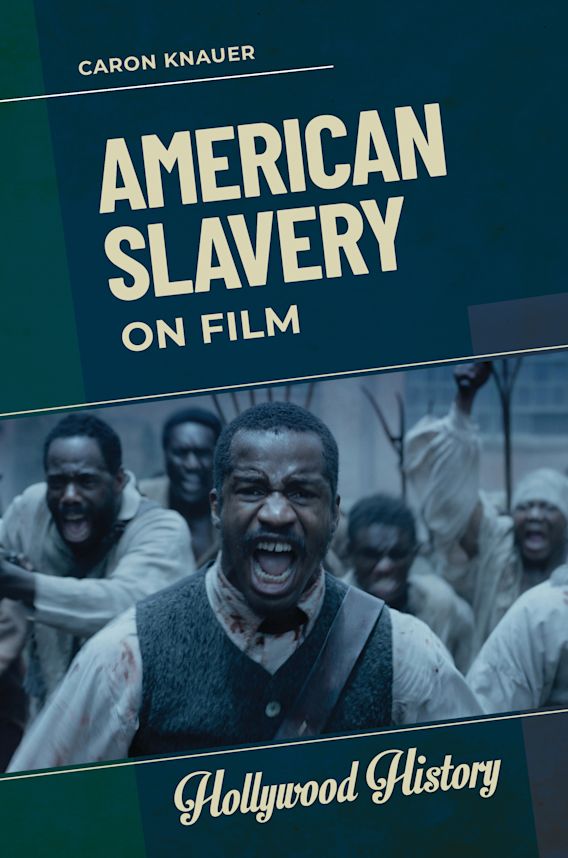
Episode 93: Resistance, rebellion, and resilience: American slavery on film

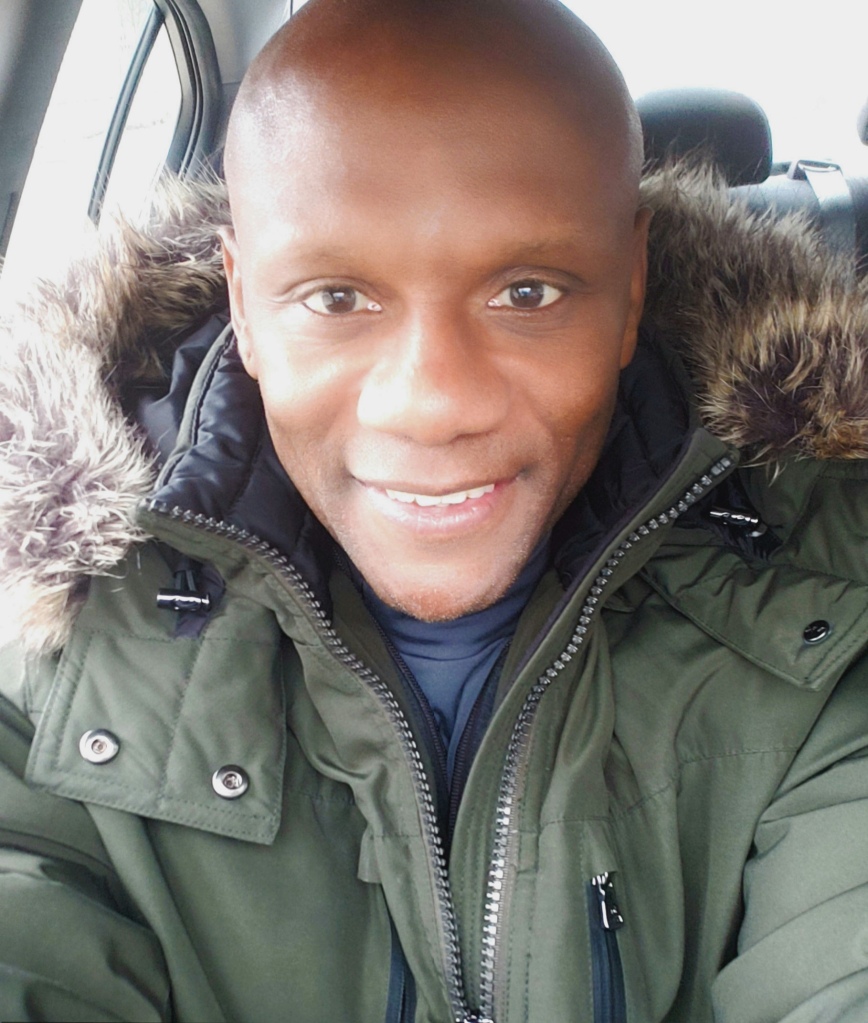
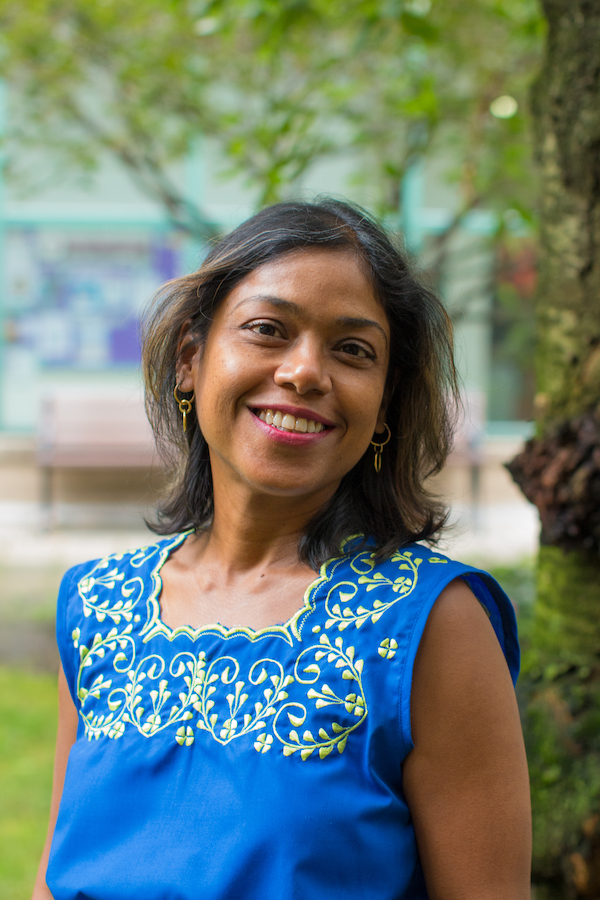
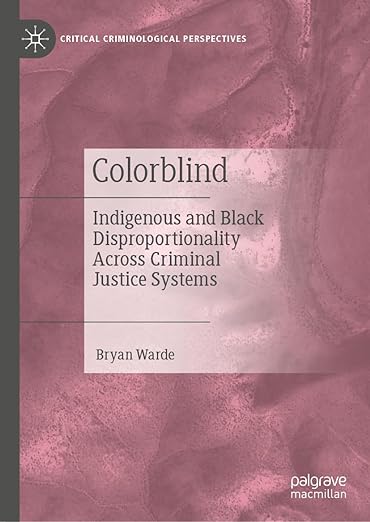
Caron Knauer’s recent publication, American Slavery on Film, is part of a Hollywood History series published by Bloomsbury/ABC-CLIO. Professor Knauer who teaches English at LaGuardia Community College, chose ten films, from Uncle Tom’s Cabin (1914) to Harriet (2019), to examine historical and contemporary depictions of the resistance, rebellion, and resilience of enslaved African Americans in the United States from the Antebellum period to Emancipation. In this episode Caron talks with Ann Matsuuchi, a librarian and faculty member at La Guardia, and Sherry Antoine, executive director of AfroCROWD. All three have a deep interest in the subject and in the role and importance of popular culture and in reference sources in education. They do a great job of getting us listeners to want to watch and learn more the films and filmmakers and writers they talk about.

Sherry Antoine, MPA, is the executive director of AfroCROWD (Afro Free Culture Crowdsourcing Wikimedia), an initiative which seeks to increase awareness and the number of people of African descent who actively partake in the Wikimedia and free knowledge, culture and software movements.

Ann Matsuuchi is currently working on writing about filmmaker Melvin Van Peebles and a book about writer and critic Samuel R. Delany with CUNY/SUNY colleagues Beth Mannion, Lavelle Porter, and Kenny Roggenkamp. She continues her valuable work with the Wikimedia New York City chapter on finding new ways of using Wikipedia in educational and media contexts, especially in the age of AI. 

Caron Knauer was associate producer of the 1995 film Waiting to Exhale. She helps produce screenings and events for Black History Month at LaGuardia Community College. On her web site, there is a comprehensive timeline whose emphasis on rebels, resistance, revolts, laws, films, and the resilience of African Americans provides a vital historical resource.

A couple of related links to topics from the episode:

Listen to Episode 93 now!
(Apple Podcasts)

Follow us! Indoor Voices (Apple Podcasts) (Twitter)

Episode 92: Louis Bury on the way things go

Louis Bury is an associate professor in the English department at Hostos Community College. He’s also an art critic, writer and poet. His first creative nonfiction book, Exercises in Criticism, was an experiment in applied poetics where he used what are known as constraint-based methods in order to write about constraint-based literature. In this episode we talk about his most recent book, The Way Things Go, (punctum books, 2023). It’s another work of creative nonfiction, also using constraint writing, and is comprised of multiple forms such as numbered lines of prose, poetry, data, dialogue, news headlines, and a couple of specific CUNY documents that will be familiar to many listeners. The book’s title, and to a large degree its subject matter, is inspired by the 1987 Fischli and Weiss film “The Way Things Go.” It is mostly quite personal, and includes intimate philosophical reflections, letters to and from Lou’s sister, Emily, and even an MRI report. At the root of all of it is a meditation on human vulnerability, of the physical, emotional and existential variety, and an overriding theme of climate change. That precarity is reflected in a grappling with daily human existence as well as the larger forces that threaten the survival of the planet. Despite the previous couple of sentences, this conversation is upbeat, and I hope you’ll find it just as inspiring as I did.

Listen to Episode 92 now!
(Apple Podcasts)

Follow us! Indoor Voices (Apple Podcasts) (Twitter)

Episode 91: Dara Byrne on making way for inspiration

Until the end of summer 2022, Dr. Dara Byrne was dean of undergraduate studies and associate provost for undergraduate retention at John Jay College. She’s now the dean of Macaulay Honors College. She’s worn a few hats during her twenty years at CUNY and the how and the why of that makes for an interesting and inspiring journey. In this episode, you get to hear the origin story of a dedicated educator and an effective administrator, one who would have been quite surprised if you told her in high school that those descriptors would one day apply to her. She talks about her very intentional leadership philosophy which she likens to an early morning snow plow. As she says, “The best part of power and access is to be able to use it to clear the debris out of the way.”

There are some great takeaways in here, not just for would-be educators and administrators, but for students and faculty and, well, humans. My personal favorite: “Learn about what you’re good at. Explore. Be open.”

Here’s more info about the AI project, “Using AI to help more college students graduate,” that Dara refers to in the interview.

Listen to Episode 91 now!
(Apple Podcasts)

Follow us! Indoor Voices (Apple Podcasts) (Twitter)
Episode 90: Academic librarians on popular culture

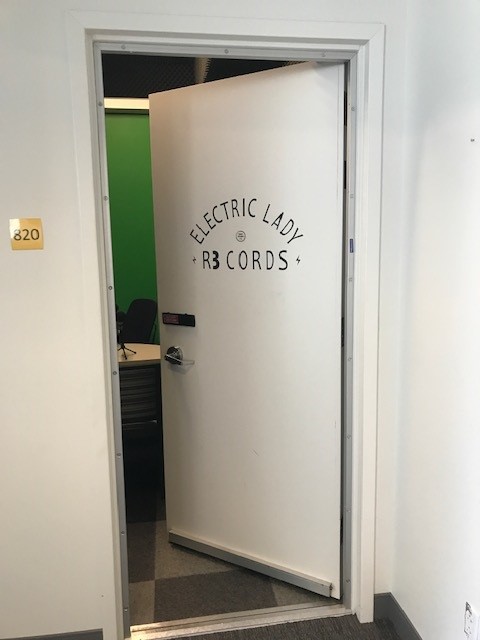
Academic librarians are unique beings in the academic world. We are faculty, we publish (or perish), and though we may or may not have PhDs, we do have (at least) two Masters degrees. We come from all disciplines, work histories, and neighborhoods (not just Brooklyn). We are outliers, in a sense, and, in general, we embrace that.

Popular culture research is also a unique entity in the academy. While popular culture studies is a vast umbrella and can be found in a variety of disciplinary homes – anthropology, American studies, media & communications, cultural studies, comp lit, etc. – it’s usually a niche hidden in or overlapped by or subsumed by a larger subject area. There exist rigorous and serious popular culture studies programs, all the way up through the doctoral level, at many universities around the country. But in most places, pop culture scholars are outliers. It shouldn’t be surprising, then, that a fair number of academic librarians are found in this eclectic space.

You will find librarians all over CUNY who are much more than their Masters in Library Science degrees. For some, our MLS is our primary identity and that is the area where we publish. For others, the library part is our job – which we tend to love, on the whole – but our professional passion lies in our “other” Masters discipline, or somewhere else altogether. The next time you run into an academic librarian, after you’ve asked your reference question and gotten an answer, ask them, “What’s your second Masters in?” or “What’s your research area?” You might be surprised and delighted. And so will the librarian.

In this conversation, I talked with two of my CUNY librarian colleagues – Vikki Terrile, Assistant Professor at the Graduate School of Library and Information Studies at Queens College and Stephanie Margolin, Associate Professor and librarian at Hunter College – about their popular culture journeys in the academy.

Related:

Listen to Episode 90 now!
(Apple Podcasts)

Follow us! Indoor Voices (Apple Podcasts) (Twitter)
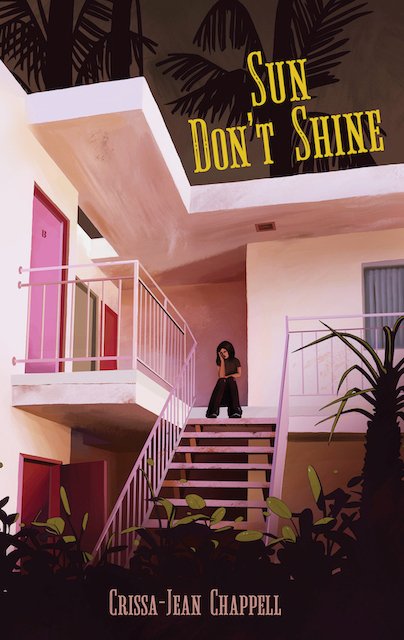
Episode 89: The Bronx Nobody Knows

Distinguished Professor William Helmreich (Graduate Center/City College, Sociology) did his daily steps and then some, logging tens of thousands of miles on foot. The result – in addition to lots of new shoes – is a series of books documenting his journeys: The New York Nobody Knows: Walking 6,000 Miles in the City; The Brooklyn Nobody Knows; The Manhattan Nobody Knows, The Queens Nobody Knows and most recently The Bronx Nobody Knows: An Urban Walking Guide (Princeton U. Press, 2023). It’s the latter one that Bill was working on when he passed away in the first COVID wave in March 2020.

Prof. Helmreich’s wife, Helaine, is carrying on her husband’s legacy and generously sharing stories from the latest book and their journeys together. She accompanied her husband on many of those miles and in this episode, she talks with Beth Harpaz, my former CUNY colleague and a favorite guest host. Beth and Helaine met while Beth was writing an article for the Forward where she now works.

Bill Helmreich

Listen to Episode 89 now!
(Apple Podcasts)

Follow us! Indoor Voices (Apple Podcasts) (Twitter)
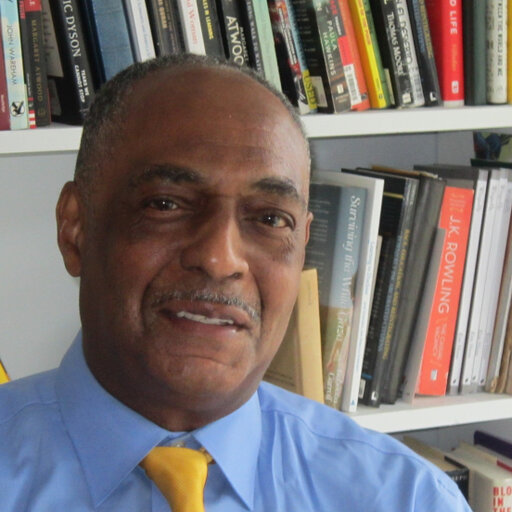
Episode 88: Jayashree Kamblé on popular romance

Jayashree Kamblé is Professor of English at LaGuardia Community College and President of the International Association for the Study of Popular Romance. She is a co-editor of the Routledge Research Companion to Popular Romance (2021). Her first monograph was Making Meaning in Popular Romance Fiction: An Epistemology (2014). She is developing a history of BIPOC romance novels with the help of a Mellon/American Council of Learned Societies fellowship and a CUNY Black, Race, and Ethnic Studies Initiative (BRESI) research grant. Follow her on Twitter @prof_romance.

Tara Jean Hickman is Educational Associate at LaGuardia and Wagner Archives and Adjunct Professor of Social Sciences at LaGuardia Community College.

In this episode, Jayashree and Tara discuss Jayashree’s latest book, Creating Identity: The Popular Romance Heroine’s Journey to Selfhood and Self-Presentation (Indiana University Press, 2023). In so doing, they bring up themes of gender, race, class, love, sex and sexual orientation, and the concept of happily after. They talk about how the romance genre effectively tracks historical, sociological, cultural and political changes over time and about the pedagogical value of these stories, characters, and plots.

Listen to Episode 88 now!
(Apple Podcasts)

Related:

Follow us! Indoor Voices (Apple Podcasts) (Twitter)

Episode 87: Victoria Sanford on feminicide

In this episode, Lehman College professor Victoria Sanford talks with Richard Relkin, Assistant Vice President for Communications & Marketing at Lehman, about her recently published book Textures of Terror: The Murder of Claudina Isabel Velasquez & Her Father’s Quest for Justice. It is the story of a 19-year-old law student who was murdered in August 2005, emblematic of the thousands of women and girls who are victims of gender-based violence in Guatemala. Claudina’s story is different in that her father, Jorge Velásquez, has been committed to seeking justice for the unsolved murder and breach of justice for nearly two decades. Victoria explains the distinction between femicide and feminicide, a political term that foregrounds the dysfunctional justice system in Guatemala, specifically how the state has failed to uphold the human rights of women and girls. For listeners interested in the current political state, watch the news for the results of the presidential run-off elections in Guatemala to be held on August 20.

A public scholar, anthropologist, and internationally recognized expert on the Guatemalan genocide and feminicide in contemporary Guatemala, Victoria Sanford is a writer, human rights advocate and Lehman Professor of Excellence at Lehman College and the Graduate Center. In addition to Textures of Terror, she is the author of six other books including Buried Secrets: Truth & Human Rights in Guatemala. She served as an invited expert witness in the Spanish National Court’s genocide case against the Guatemalan generals and in an indigenous land rights case in the Inter-American Court of Human Rights. A John Simon Guggenheim Fellow and Bunting Peace Fellow at Harvard University’s Radcliffe Institute for Advanced Study, she has also held fellowships at the US Institute for Peace, the Virginia Foundation for the Humanities, and Fulbright Scholar awards at the Universidad Libre and Javeriana University in Bogota, among others.

Listen to Episode 87 now!
(Apple Podcasts)

Follow us! Indoor Voices (Apple Podcasts) (Twitter)
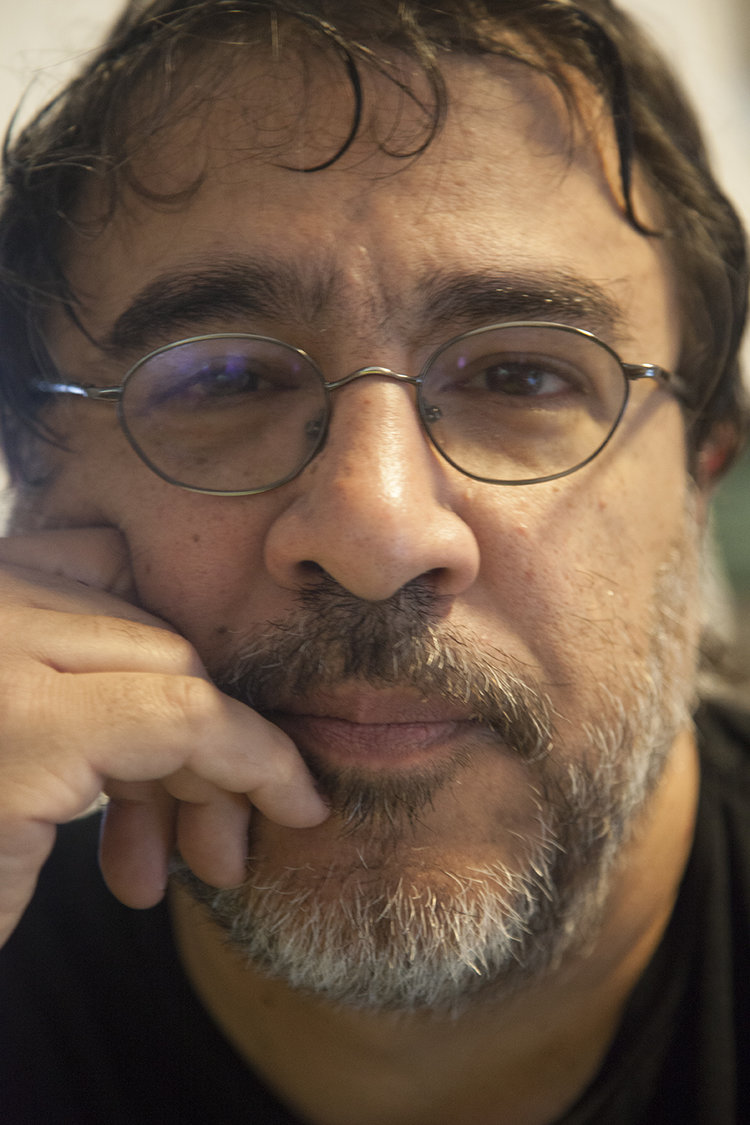
Episode 86: Julie Turley and Joan Jocson-Singh on Musicking Motherhood

Julie Turley and Joan Jocson-Singh are the authors of Heavy Music Mothers: Extreme Identities, Narrative Disruptions published by Lexington Books in April. Joan and Julie are both librarians, Julie at  Kingsborough Community College and Joan, formerly at Lehman College, is now library director at the new Lucas Museum of Narrative Art in Los Angeles. They are also both musicking mothers and rock and metal music scholars. In this episode, they talk with another librarian and rock music scholar, Monica Berger, who works at New York City College of Technology. All three are supremely knowledgeable and passionate about women and rock/metal music. If this topic happens to be up your alley, be sure to stay tuned to the end for the call for collaboration.

Joan Jocson-Singh is the inaugural library director at the Lucas Museum of Narrative Art and moderates a Facebook group where Metal academics and librarians discuss all things metal.  Read more about her work here.

Julie Turley is Assistant Professor and Open Education Librarian at Kingsborough Community College. She is also a fiction writer with work in North American Review, Quarterly West and other journals. Her music research has included Mötley Crüe, “rock ‘n’ recovery” memoirs, and mothers who participate in rock and heavy metal music subcultures.

Monica Berger is Associate Professor and Instruction and Scholarly Communications Librarian at the Ursula C. Schwerin Library at the New York City College of Technology.

Listen to Episode 86 now!
(Apple Podcasts)

Follow us! Indoor Voices (Apple Podcasts) (Twitter)

Episode 85: Samantha Majic on celebrity feminism

“We cannot simply dismiss celebrity anti-trafficking activism as a case of high-profile virtue signaling.” – From Lights, Camera, Feminism? Celebrities and Anti-trafficking Politics

In her new book, Lights, Camera, Feminism? Celebrities and Anti-trafficking Politics, Samantha Majic, Professor of Political Science at John Jay College of Criminal Justice, looks at those unelected, self-appointed elites, aka celebrities, who take up human trafficking as their cause. With cases studies that include Mira Sorvino, Ashley Judd, Jada Pinkett Smith, Ricky Martin, Ashton Kutcher and Julia Ormond, she asks how and to what extent do celebrities raise awareness, and what are the limits of their advocacy and activism? In essence, what good do celebrities do?

Samantha is also the co-author of Youth Who Trade Sex in the US: Intersectionality, Agency, and Vulnerability, coeditor of Negotiating Sex Work: Unintended Consequences of Policy and Activism, and author of Sex Work Politics: From Protest to Service Provision. Find out more about her research here.

Listen to Episode 85 now!
(Apple Podcasts)

Follow us! Indoor Voices (Apple Podcasts) (Twitter)
Episode 84: John Jay College’s goals for quantitative literacy

Quantitative literacy and reasoning skills are not important only to some disciplines. They’re critical to all subjects, and they play a part in all of our lives. The Academic Affairs office at John Jay College recently announced plans to re-envision quantitative reasoning and literacy (QR & QL) in the curriculum with a goal of ensuring that every student who graduates has the skills they need to thrive in the 21st century. Under the leadership of Interim Dean of Academic Programs and Professor of Political Science Andrew Sidman, faculty and administrators will collaborate to put this plan into action over the next couple of years. Listening to this episode has the potential to alter your self-perception as someone who’s “bad with numbers.” You’re probably better than you think because you’re surrounded by numbers and data every single day.

A few related QL/QR resources of interest:

  • Numlock News, Substack of Walter Hickey, a data journalist who is obsessed with culture, society and fascinating numbers buried in the news
  • Michigan State U’s QL guide
  • QL & the Humanities (from the Alliance for Networking Visual Culture)

Listen to Episode 84 now!
(Apple Podcasts)

Follow us! Indoor Voices (Apple Podcasts) (Twitter)