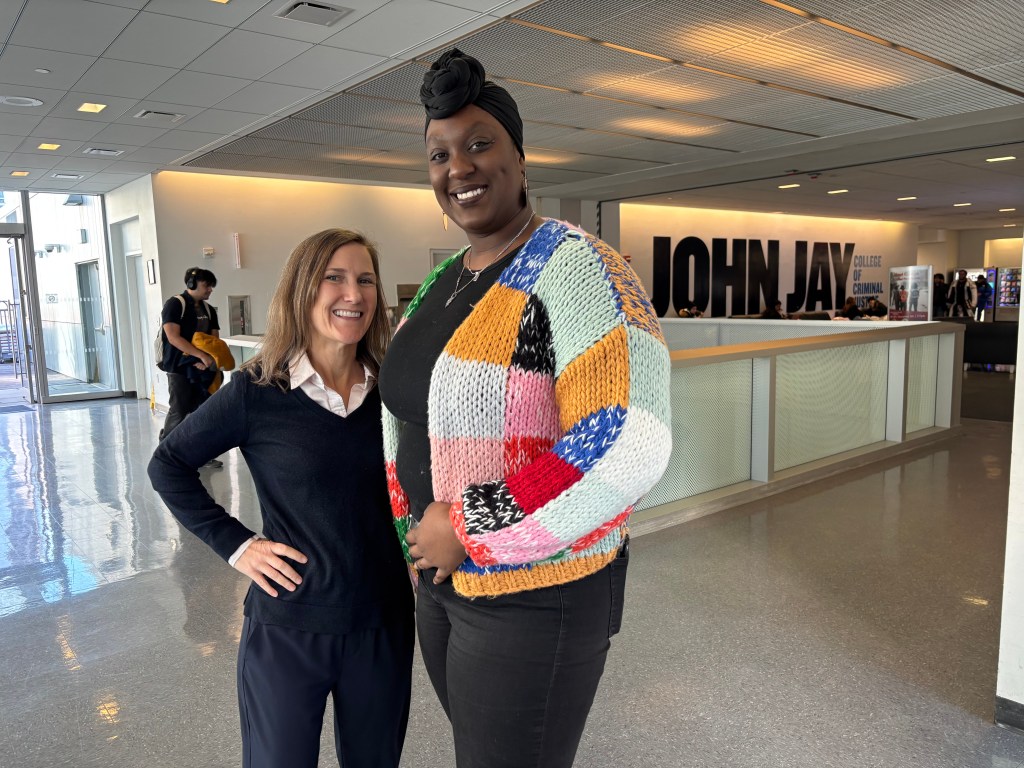
I have been a reference librarian at John Jay College of Criminal Justice since 2007. I enjoy consuming and writing about pop culture, old and new. Especially television. And podcasts.
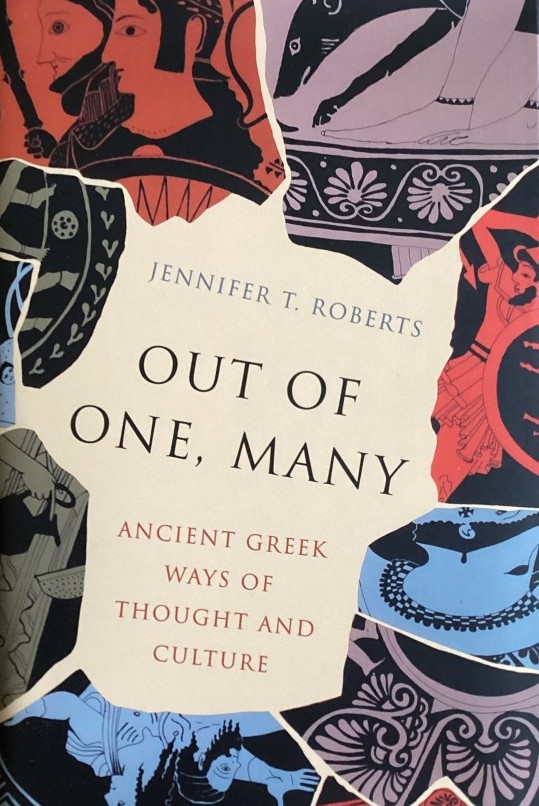
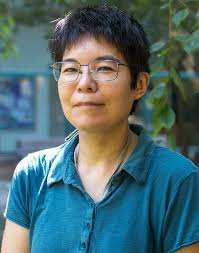
Jennifer T. Roberts, Professor of Classics and History, and Nickolas Pappas, Professor of Philosophy and Classics, have been City College colleagues for more than thirty years. Here they discuss Jen’s latest book, Out of One, Many: Ancient Greek Ways of Thought and Culture. The word “many” in the book’s title describes the variation within and among the ancient Greeks, and the word “one” is a nod to the steadfast ego and drive of the individual, within which, too, there is vast diversity. They address opposing world views by various thinkers on the existence, the definition or surprising backstory and impact of concepts such as motion, courage, competitiveness, ostracism, and antagonism and Nick asks Jen what she thinks people imagine when they think of antiquity, and what students find most incomprehensible when it comes to learning about Ancient Greece.
In the event you might think this episode is not for the likes of you, I assure you that the conversation is lively, accessible and includes references to Seinfeld, the Muppets and Percy Jackson. Above all, their friendship and scholarly amity shines through, making this a conversation that will likely have you smiling as you listen.
Scroll down this page for a bit more about Jen who earned the Distinguished Professor title in 2025.
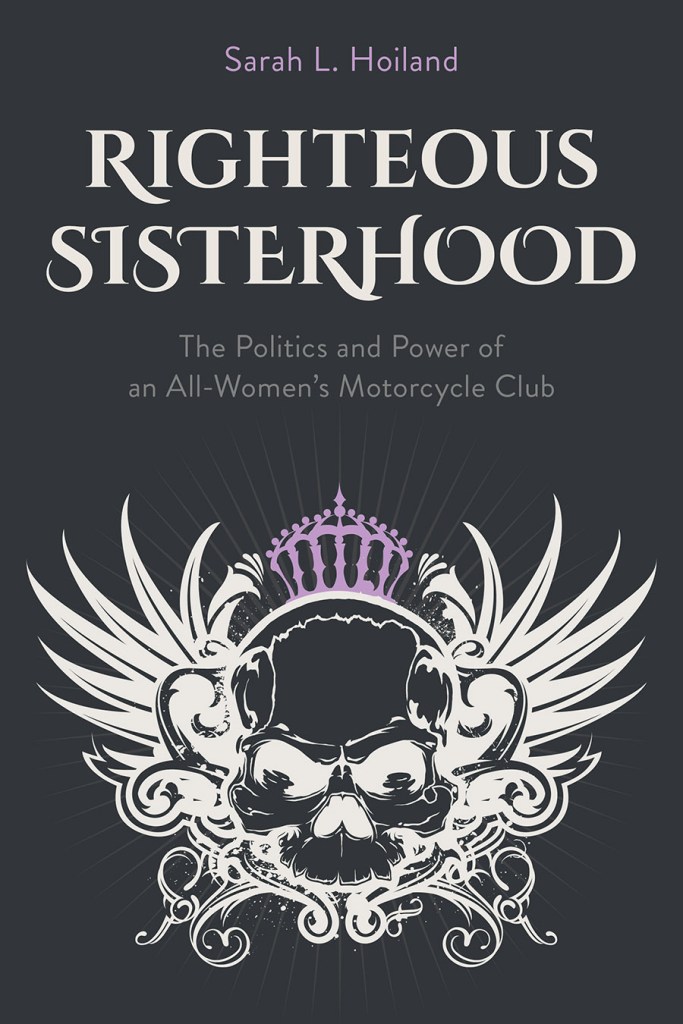
In this episode, we have the good fortune of welcoming back returning guest and host, Dr. Sarah Hoiland, Professor of Sociology at Hostos Community College. When she was here in 2018, she talked about an article she had written about the 1947 Gypsy tour motorcycle rally in Hollister, California. That was foundational research she was conducting on motorcycle culture and women’s empowerment which, seven years later, became the book Righteous Sisterhood: Politics and Power in an All-Women’s Motorcycle Club published by Temple University Press. She is in conversation here with Ashley Walker, a City College political science student (Note: when this was recorded in December, she was just about to graduate from Hostos!). The two met through the HOPE program (Holistic Oasis for Parents’ Education) at Hostos which is directed by Sarah. Ashley talks with Sarah about her years-long experience with an all-women’s motorcycle club from her embedded status to her eventual exile or “civic death.” In so doing, they address issues of gender, power, and the meaning of rituals and lineage and they end on the positive note of the joy of community building.
Sarah L. Hoiland, Professor of Sociology at Hostos Community College, the Research and Budget Director at the CUNY Academy, and Principal Investigator of two current National Science Foundation funded research projects. Righteous Sisterhood: Politics and Power in an All-Women’s Motorcycle Club (Temple University Press, 2025) offers readers a lens through which to see how righteous sisters forge a political community within and through RSMC and invites readers to explore how these women negotiate identity, politics, and the pursuit of excellence in an environment that resists change. It is a story of empowerment, defiance, and the transformative power of community amid a fractured society—while also revealing themes of disempowerment, conformity, and the exclusionary force of political communities. Her research spans a variety of contexts and topics, but it is centered around questions of identity, transformation, and belonging. In addition to the episode mentioned above, her other previous visits to Indoor Voices can be found here and here.
Ashley Walker is a recent graduate of Hostos Community College with an Associates Degree in Business Management and is currently a Political Science major at City College. She is an avid learner, loves potting/planting, books, music, and all things Tim Burton! In her career, she hopes to make lasting change in the intersections of communities she inhabits by way of advocation and policy change. Ashley is a mom, a student, a proud member of Hostos Community College HOPE program, Student Government, Student Leadership Academy, Phi Theta Kappa Honor Society, as well as the Malave Leadership Academy and is looking forward to putting her hands in as many “pots” as she can.
This episode reunites two friends and former CUNY colleagues, Char Adams and Beth Harpaz. The occasion is the publication of Char’s new book, Black-owned: The Revolutionary Life of the Black Bookstore, published by the Penguin imprint, Tiny Reparations Books. They discuss the history and continued relevance of the Black-owned bookstore which serves as a center of political resistance and a community and cultural pillar. The first Black-owned bookstore was opened by an abolitionist in 1834 and since then, the institution has seen booms and resurgences. They have also been targets of surveillance and violence and withstood the dominance of corporate chains and online megastores. They thrive today, continuing their tradition of activism and community building. Char’s book is a rigorously reported history that showcases the Black bookstore as a revolutionary institution built on community, resistance, and joy.
Char Adams is a 2020 alumna of the Women’s and Gender Studies Masters program at the CUNY Grad Center. Learn more about her work here. Beth Harpaz is a journalist, author, playwright and Char’s former colleague. They met at CUNY when they both produced the website SUM which was a spiritual sister of this podcast. Both Char and Beth have been on the podcast before and this conversation is as enlightening as it is a heartwarming reunion.
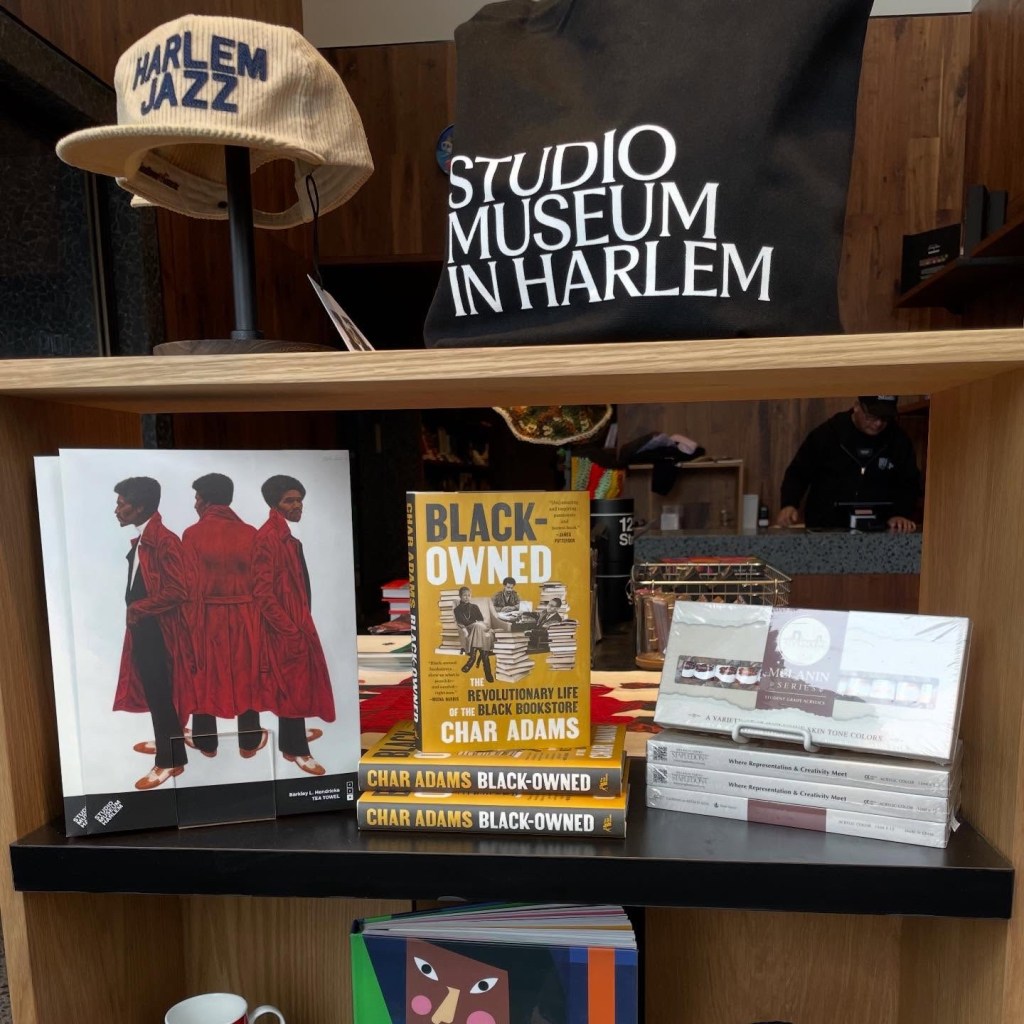
No small thing: Beth visited the newly reopened Studio Museum in Harlem recently and was overjoyed to see Char’s book prominently displayed in the front window.
Buy Black-Owned from a local Black-owned bookstore!
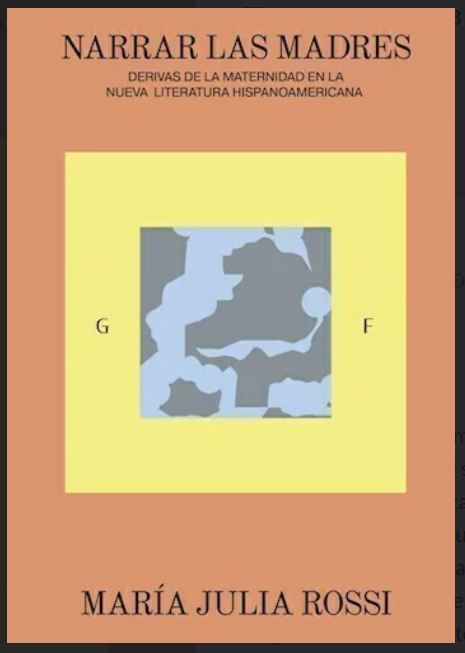
This episode exemplifies the ideals of Indoor Voices. It is a conversation between two people whose work overlaps and interfaces, both working away at CUNY for years without knowing of the other until very recently, and now that they have met, they have already collaborated and have so much to talk about that it justifies a podcast of its own. You’ll also witness them truly thinking and listening – in real time. It is the exact opposite of a scripted conversation. Dr. Destry Maria Sibley is a recent CUNY graduate center alumna whose dissertation is entitled, “Narrating Mother, Narrating Twenty-First Century America: On Choice, Refusal, and Relation.” Dr. María Julia Rossi is professor in the Modern Languages and Literatures dept at John Jay and the author of, among other books, Narrar Las Madres or Narrating Mothers. To put it too simply, the nexus of their scholarly Venn diagram is narratives about motherhood. They talk about the proliferation of motherhood literature in the last decade and a half; the presence in more recent memoirs of maternal ambivalence; the freedom of fictional characters to express less nuanced feelings and behaviors; the role of a political angle on motherhood narratives, asking whether the political and the personal are on a continuum or exist as a dichotomy; the differences between motherhood literature in Spanish and English; and how texts on motherhood both reflect cultural evolution and affect it.
Recommended reading:
Eva Baltasar, Boulder
Rachel Cusk, A Life’s Work: On Becoming a Mother
Laura Freixas, A mí no me iba a pasar: Una autobiografía con perspectiva de género
Ariana Harwicz, Matate, amor (translated as Die, My Love)
Nuria Labari, La mejor madre del mundo (translated as World’s Best Mother)
Jane Lazarre, The Mother Knot (translated as El nudo materno)
Yiyun Li, Things in Nature Merely Grow
Valeria Luiselli, Lost Children Archive
Valeria Luiselli, Los ingrávidos (translated as Faces in the Crowd)
Lorena Salazar Masso, Esta herida llena de peces (translated as This Wound Full of Fish)
Brenda Navarro, Casas vacías (translated as Empty Houses)
Helen Phillips,The Need
Anne Boyd Rious, Meg, Jo, Beth, Amy: The Story of Little Women and Why It Still Matters
This episode was recorded at John Jay College’s brand new Digital Creation Lab. Thank you, Program Manager Girard Tecson for making the studio space available to us.
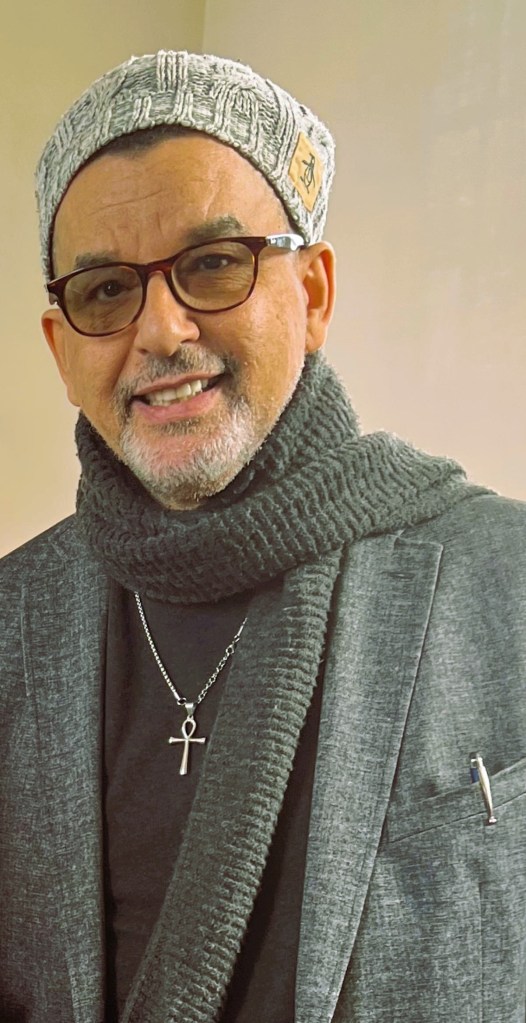
This is Dr. Mark Christian‘s second visit to the podcast. Last year he was here to talk about his books on Booker T. Washington and Liverpool England’s overlooked Black history. In this episode he is in conversation with his Lehman College colleague Dr. Gillian Bayne to talk about his bookFrederick Douglass: A Life in American History, published by Bloomsbury in 2025. They discuss the personal reasons that got Mark interested in the subject, the sources he consulted, and what’s missing from other biographies of Douglass. They also address the hardships endured and courage displayed throughout Douglass’s life, his abolitionist activities, his belief in gender equality, his influential writings and speeches and the importance of reading to freedom. Dr. Christian closes by reading a poem he wrote about Douglass as a way to sum up his thoughts, pay respect, and to acknowledge the integration of poetry and political discourse that was not uncommon in Frederick Douglass’s day. Overall, Dr. Christian strongly and rightfully argues that Douglass should be understood as a major figure in American and British history as a whole, not only within the confines of Black history.
Dr. Mark Christian is Professor in Africana Studies & Sociology at Lehman College. He arrived at CUNY in the fall of 2011 as a full and tenured professor; having spent eleven years at Miami University of Ohio. He was the Chairperson in the Department of Africana Studies at Lehman (2011-2019). He has been teaching in higher education for over three decades in the UK and US. A prolific writer, he has to date published eight books and edited three special issue journals in his disciplines. He has published copious journal articles, book chapters, encyclopedia entries, and book reviews. He was educated in the UK (BA Honors & PhD) and the US (MA in Africana Studies); he was a senior Fulbright Scholar at Kent State University’s Department of Pan African Studies (1997-1998). He is currently researching for a critical biography on Martin Luther King Jr.
Dr. Gillian Bayneis a professor of Science Education in the Department of Middle and High School Education at Lehman College and holds a dual appointment in the Urban Education Department at the CUNY Graduate Center. She brings to her work over thirty-five years of science education experience in both New York City public schools and in higher education. Her advocacy for equality and equity within communities that have been marginalized as a result of societal, educational and political injustices has been foundational to her work. Dr. Bayne is the lead educator for the Training, Education and Public Engagement in the GLOBE program, a science educator and research collaborator with Columbia University’s Center for Smart Streetscapes program, and has been a PI and CoPI on NASA and NSF science education focused grants. She is involved in science educational outreach at Genspace, a Brooklyn based community lab, and the National Society of Black Physicists x Harlem Gallery of Science Mentoring Program. Dr. Bayne works with and supports beginning, seasoned and pre-service science teachers, as well as science and urban education doctoral students and graduates. Her work has been published in highly respected scholarly venues.
Special thanks to our Lehman College Multimedia Center colleagues Brendan McGibney, Luisa Sotelo Crisantos, and Magda Soto, and Lehman’s Assistant Vice President for Communications and Marketing, Richard Relkin.
Dr. Caroline Reitz is an associate professor of English at John Jay and the Graduate Center and the author of Female Anger in Crime Fiction published by Cambridge University Press in the Elements in Crime Narratives series. She is in conversation in this episode with Dr. Olivia Rutigliano, a writer, film critic, and editor at Literary Hub and Crime Reads. Together they take on the female anger ecocsystem, particularly the way anger is portrayed in popular culture, the role that anger plays, and its potential and its limits. They ask where justice fits into the narratives of, for example, the streaming series Killing Eve, The Handmaid’s Tale, and Bad Sisters and in the novel My Sister, the Serial Killer. They ask what pop culture’s role is in bringing the causes and outcomes of anger to the fore and if these representations can be educational and empowering. They address trad wives, female assassins and the chicken and egg conundrum of madness and anger. They reference bell hooks, Audre Lorde, Malcolm X, Sara Paretsky, Patricia Melo, George Orwell, Victorian studies, and all the waves of feminism. They reminisce about the olden times when ultra rich megalomaniacs used to be philanthropic and at least ostensibly concerned about humanity. They weave in the importance of baby goats and recycling your tuna cans, and Caroline comes up with a crime plot on the spot. This conversation will fire you up in good ways and, well, that’s one of the questions asked here, and not rhetorically – what use is getting fired up?
Caroline Reitz is Associate Professor at John Jay and the Graduate Center and directs the Vera Fellows Program at John Jay. She is currently teaching two literature classes: Text and Context (with a focus on crime fiction and activism) and Special Topics in the 19th Century. In Spring 2026 she will teach a class at the Grad Center called “Bad Sisters.”
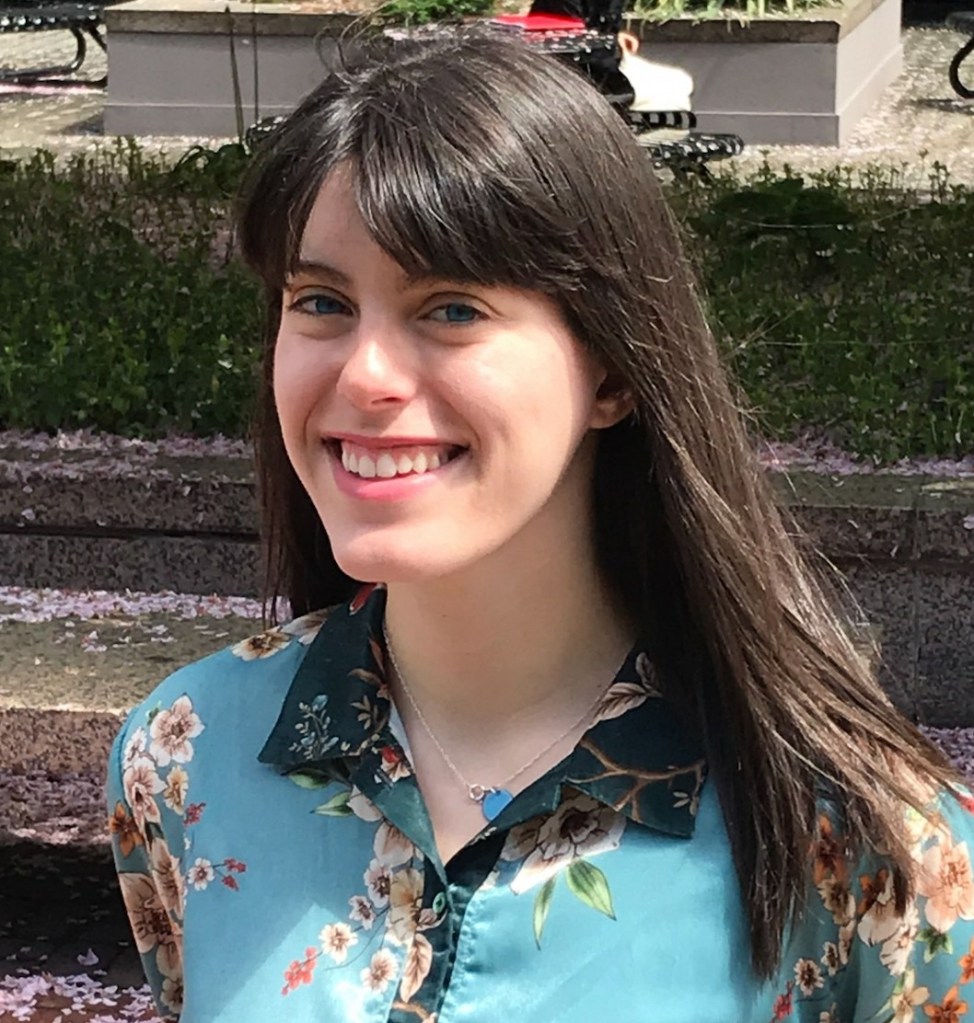
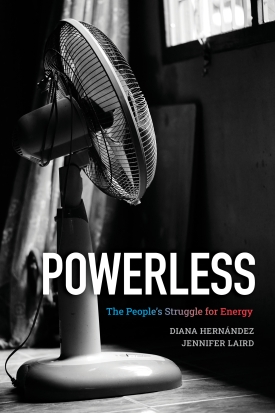
This episode is about energy insecurity, a topic you probably don’t hear as much about as you do food insecurity since it is by nature a hidden hardship. Richard Relkin, Assistant Vice President for Communications and Marketing at Lehman College, talks with Jennifer Laird, co-author of the book Powerless: The People’s Struggle for Energy, published this year by the Russel Sage Foundation. Dr. Laird’s co-author is Diana Hernández, Associate Professor of Sociomedical Sciences at Columbia University’s Mailman School of Public Health. Drs. Laird and Hernandez argue that household energy is a basic human right and propose policies to expand access to safe, clean, and affordable energy, including improving the energy safety net, reforming rate structures, and promoting equitable renewable energy transitions.
Dr. Jennifer Laird
Here are some of the resources discussed in this episode:
I am a proud citizen of the CUNYverse and I feel especially fortunate to be here right now. CUNY is in the middle of a three-year, Mellon Foundation-funded project called Cultivating Archives & Institutional Memory. It’s an unprecedented survey of the university’s history that involves collecting, documenting and providing access to CUNY’s rich archives that is already resulting in a valuable resource for historians and the general public.
In this episode, you’ll hear a conversation between three avid champions of Wikipedia and all its offshoots. Ann Matsuuchi, an instructional technology librarian at the LaGuardia Community College Library who has been a guest host on this podcast before, facilities a great discussion with Natalie Milbrodt, University Archivist and co-principal investigator (with Michael Waldman, Interim University Dean of Libraries and Information Resources ) of the Cultivating Archives project, and Wikimedian-in-Residence Richard Knipel. They provide some context that many of us might overlook or take for granted, that is, an overview and appreciation of Wikipedia and its role and evolution over the nearly 25 years of its existence. They focus on CUNY’s active role in facilitating community engagement in documenting history and culture for CUNY citizens, New Yorkers and the world.
If you teach at CUNY, you have the opportunity to work with these professionals in your classes. As you listen, you might develop some ideas, and you are invited to engage with Natalie, Richard and Ann in your classes.
Lastly, thanks to the Cultivating Archives & Institutional Memory project, all past and future episodes of this very podcast are now archived on JSTOR Forum, along with so many of the other items that the team is collecting and preserving. A special thanks to team member Digital Archivist Bridget Day for all her work on this and to all the many contributors to this podcast over the last eight years.
Thank you for listening, and enjoy the conversation. Here are some of the topics discussed in this episode:
This is a great conversation between my brilliant John Jay colleagues Dr. Nathan Lents, Professor of Biology, and Dr. Olivera Jokić, Associate Professor of English and Gender Studies and Director of the Gender Studies Program. The occasion is the publication of Nathan’s most recent book, The Sexual Evolution: How 500 million years of sex, gender and mating shape modern relationships. The book is about sexual behavior throughout the animal kingdom, what animals have to tell us about sex and gender, and in every sense of the word, the queerness of animals.
The conversation ventures into matters such as the limitations and even dangers of the preference for the human binary and those pesky Victorian buckets of maleness and femaleness; what does it mean to call something natural or unnatural; challenging the notion of the “survival of the fittest”; the benefits of neurodiversity; social control and its relation to categories; and spies and the role of taboos around sex. This conversation itself, a cross between a humanist and a scientist, exemplifies the benefits of variation. As Nathan says, “Diversity is often the point.”
You can hear more about Dr. Jokić’s recent work on Episode 106 in conversation with Dr. Dijana Jelača.
A chock-full bibliography featuring related and discussed works, provided by Dr. Jokić:
This is a very special episode! It was recorded with my John Jay colleagues before a live audience. It came about as an acknowledgement of this podcast passing the 100 episode mark and thanks to Dan Stageman, Director of Research at the Office for the Advancement of Research (OAR), Remmy Bahati, Research Communications Specialist at OAR, and the A/V team who recorded the event which you can listen to or watch on OAR’s YouTube channel.
We addressed the importance of the humanities in the face of a lot of pessimistic press about their relevance and value in recent years. The panel consisted ofDavid Munns (History), Allison Pease (Provost & Senior Vice President of Academic Affairs), Belinda Rincon (Latin American and Latinx Studies and English), and Dean Ringel (History). The audience participated and enriched the conversation even more.
In a bonus segment, I had a separate conversation withDr. Charissa Che, Assistant professor in the English department at John Jay. She talks about participating in the National Humanities Alliance (NHA) Advocacy Day and shares her clear-eyed and eloquent take on the state of the humanities.
Remember, as my college president said in 1983, “Poets make good doctors.”










 Indoor Voices Podcast
You must be logged in to post a comment.